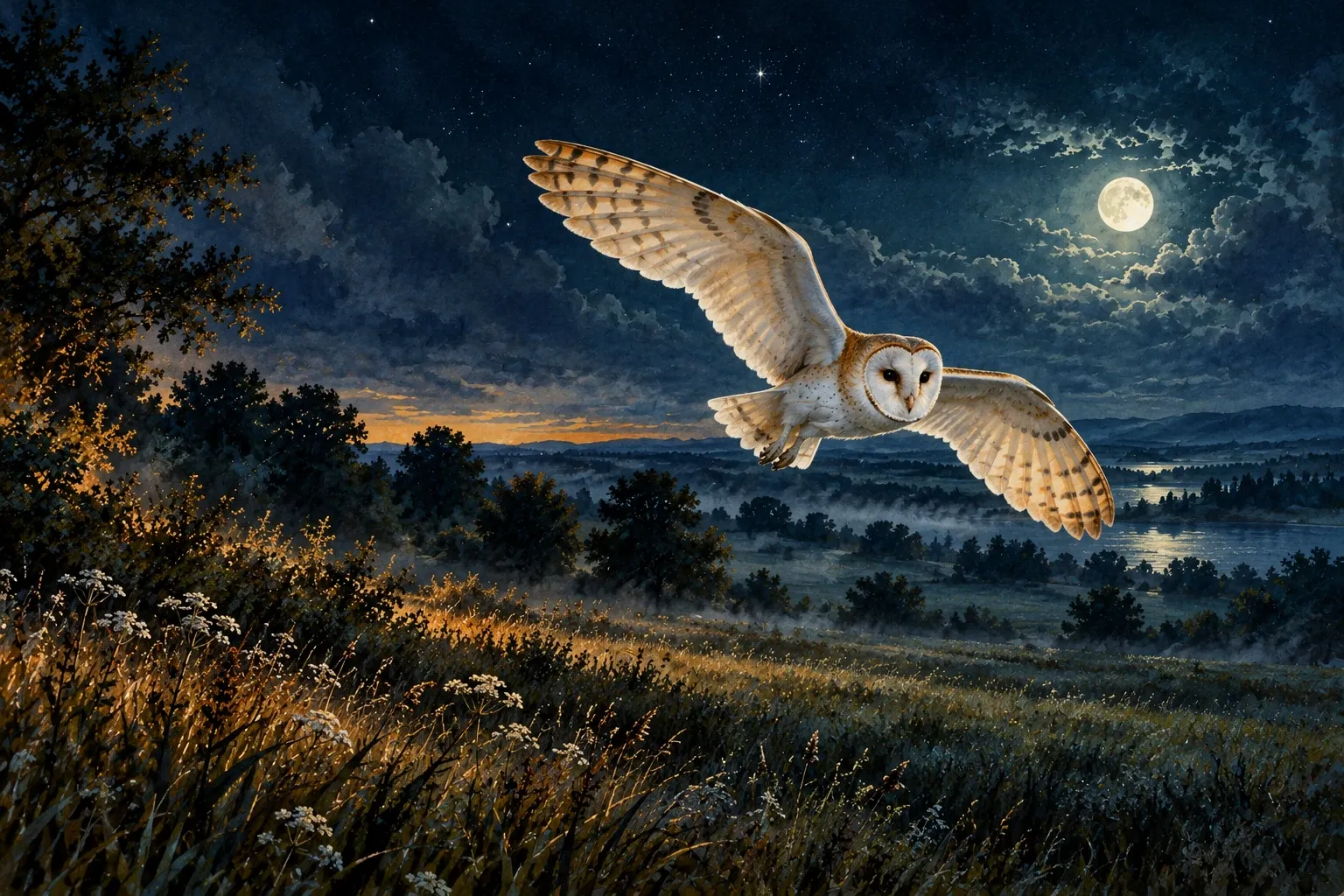
A barn owl crosses a field as the light drains from the sky, pale wings passing without a sound. Its heart-shaped face gathers the small rustle of a mouse beneath grass; it turns toward what others cannot hear, then drops through the dark with sure aim. The barn owl’s meaning begins there: listen closely, trust what careful attention reveals, and use what you find with skill. It is a companion for quiet thresholds, when a life asks for tenderness, patience, and a sharper ear.
The barn owl’s quiet counsel
The barn owl hunts by listening as much as by looking. Its facial disc channels sound toward ears set at different heights, helping it locate prey hidden from sight. That way of living offers a plain spiritual teaching: stillness is a form of attention, and attention can uncover what noise has buried. When the world grows crowded with voices and demands, the barn owl’s counsel is to step back long enough to hear your own thought.
Its pale face and sudden appearance can make it seem like a messenger from another place. Let that image remind you of the shortness of an ordinary day. The barn owl spends the night searching, feeding, and returning to shelter; it does not hoard its life for some later season. Let love be spoken while there is time to speak it. A kind word, a visit, a hand offered in the moment may matter more than grand promises saved for someday.
The owl also knows how to meet a changing field. When prey is scarce in one patch, it searches another; when its young need food, it can hunt in daylight as well as darkness. Its gift is resourcefulness without fuss. In a lean season, look carefully at what remains within reach. The answer may be a skill you have overlooked, a quiet ally, or a small opening that becomes enough when you meet it with patience.
What the barn owl lends you
The barn owl glides low over a field, listening for small changes beneath the grass. A lifelong kinship with this watchful bird belongs to people who notice what others miss and move steadily through uncertain hours. Let close observation guide your next turn, as the owl follows faint sounds to hidden prey.
The owl does not chase every sound at once; it listens, locates, and commits. When a task demands focus, borrow that patient hunt: give each concern a quiet hearing, then follow the clearest signal. Its keen ear brings emotion and thought back into balance by attending closely before acting.
The barn owl ranges over open ground, finds what can sustain it, and returns to shelter. When your resources feel thin, name what you need and ask someone trustworthy. The owl’s resourcefulness lends you the skill to find help and nourishment, while memory of those who cared for you can steady your search.
The owl in British folklore
In British folklore, people called the barn owl a ghost owl, church owl, or demon owl. Its white shape gliding across churchyards, its shriek, and its hiss near a nest gave the bird an uncanny presence in the night. That old unease belongs to a real meeting between people and a wild hunter: the owl came silently, appeared suddenly, and spoke in a cry unlike the familiar calls of daytime birds.
The barn owl keeps that mystery without asking us to fear it. It moves through darkness by listening, and its pale flight leaves the field quiet again. Carry that image with you: a white wing over the grass, turning toward the smallest sound, finding a way forward one careful breath at a time.