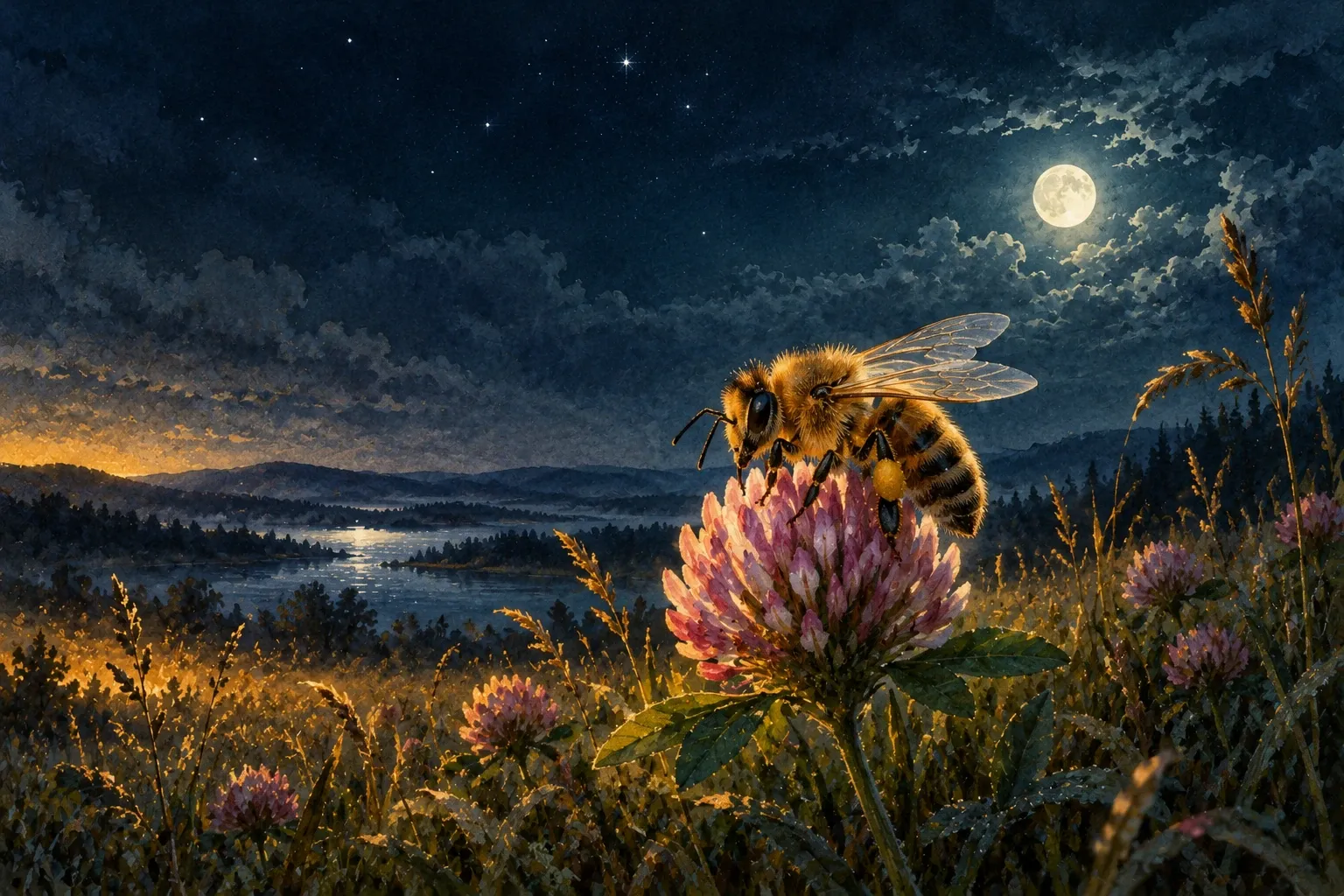
A bee lands deep in a flower, gathers nectar, and rises with pollen caught on her legs. At the next blossom, that dust helps make fruit. The small journey feeds a hive and carries life through a field. Bee’s meaning lives in this joining: devoted work can make the world more fruitful, and its sweetness belongs to more than one.
Bee teaches the measure of work
Bee asks you to give your work a clear purpose, then taste what it has made. A worker bee travels from flower to flower with pollen, helping plants set seed and fruit. Honey comes from many visits and much patient labor. Yet a life spent only gathering would miss the nectar itself. Bee’s lesson holds both: keep faith with the task, and take pleasure in its harvest.
When Bee appears as a guide for a season, look at the work already humming around you. Perhaps an idea is ready for the first practical steps; perhaps a project needs patient hands and a few good companions. Bee brings resolve to the work and reminds you that effort can be fertile. She also asks whether your days have room for rest, friendship, and the simple sweetness of being alive.
A lifelong kinship with Bee belongs to people who find their way by making, tending, and learning. The bee’s precise return to flowers and hive gives this kinship its shape: choose the work that matters, conserve your strength, and carry what you gather where it can do good. Her comb is built from repeated small acts, each one fitted to the next. So a life can take shape through steady attention, with a place for beauty as well as usefulness.
When a task calls for coordination, persistence, or a calm word that helps others work together, call on Bee’s strength. Her dance carries news of a food source to the hive; her flight joins distant blossoms in one living pattern. Bee lends focus to a shared undertaking and courage to defend what deserves protection. Her sting belongs to that same fierce care: sweetness does not mean surrendering your boundaries.
The hive holds many gifts
A bee’s gift is both her own and shared. She gathers for the hive, yet her passage also nourishes flowers, fruit, and creatures far beyond it. This is a picture of service that reaches outward: one person’s careful work can sustain a wider circle. Bee teaches cooperation through action, not through sameness. Each worker contributes, and the whole depends on the labor moving between them.
The honeycomb gives this teaching a home. Its repeating hexagons are sturdy and economical, a shelter made beautiful by order. Bee shows how clear roles and thoughtful structure can protect a common purpose. When confusion gathers around a project, her example says to sort the work, share what you know, and let each person’s effort connect to the next.
Bees also communicate in movement. A forager’s waggle dance points other bees toward flowers, giving direction through a small, precise performance. Bee reminds us that words are not the only messages: timing, posture, and attention can carry meaning too. Her quick, purposeful return asks for clear communication when people must find their way together.
Bee in dreams
A bee in a dream can bring the image of a project ripening toward a sweet ending. The hive’s shared labor may point to prosperity, inventive work, or pleasure in seeing a community succeed. If a responsibility has been avoided, the dream may put the busy bee close at hand: the task asks for focus and a useful part in the work.
A bee sting in a dream suggests uneasy suspicion about someone close. The sting is brief and sharp; it can mark a worry that has become hard to ignore and a conversation that needs honesty. A bee swarming around another person carries a different warning: appearances may be misleading, and care is called for before trusting that person’s intentions.
A queen bee may appear as a sign of authority or, in the dream tradition that associates her with fertility, a hopeful image for someone wishing to conceive. A beehive turns attention toward home and shared responsibilities there. Its many workers move as one household, making the dream a picture of cooperative effort within the family.
The bee’s old stories
In ancient Egypt, people told that Ra’s tears became bees, who carried messages to humankind. The bee also stood for royalty in Lower Egypt, where honey served as food, medicine, an offering, and even payment of tax. In that image, the sun’s power becomes something golden and sustaining, and the bee carries it between divine and human worlds.
In Greek tradition, priestesses of Demeter were called Melissae, or Bees, and bees belonged to the mysteries of Demeter and Persephone. Greek stories also called the bee a bird of the Muses, connecting its sweetness with inspired speech. The bee’s work among blossoms and its honey made it a fitting image for fertility, eloquence, and the hidden passage between life’s seasons.
Hindu traditions connect bees with Kama, the god of love, and with spring’s longing and sweetness. Vishnu and Krishna, too, are linked with bees; the goddess Bhramari bears a name meaning “Bees.” In these stories, the bee’s hum carries a sacred vibration, while its work in the flowering world joins desire, renewal, and life.
In Mayan tradition, Ah Muzen Cab is the god of bees. On the Yucatán Peninsula, Maya communities have honored a stingless bee with careful burial when it is injured or killed. These old ways hold the bee close to the living land and its gifts. The bee is small, yet the fields remember its passage: flower after flower, the work continues, and the world grows sweet.