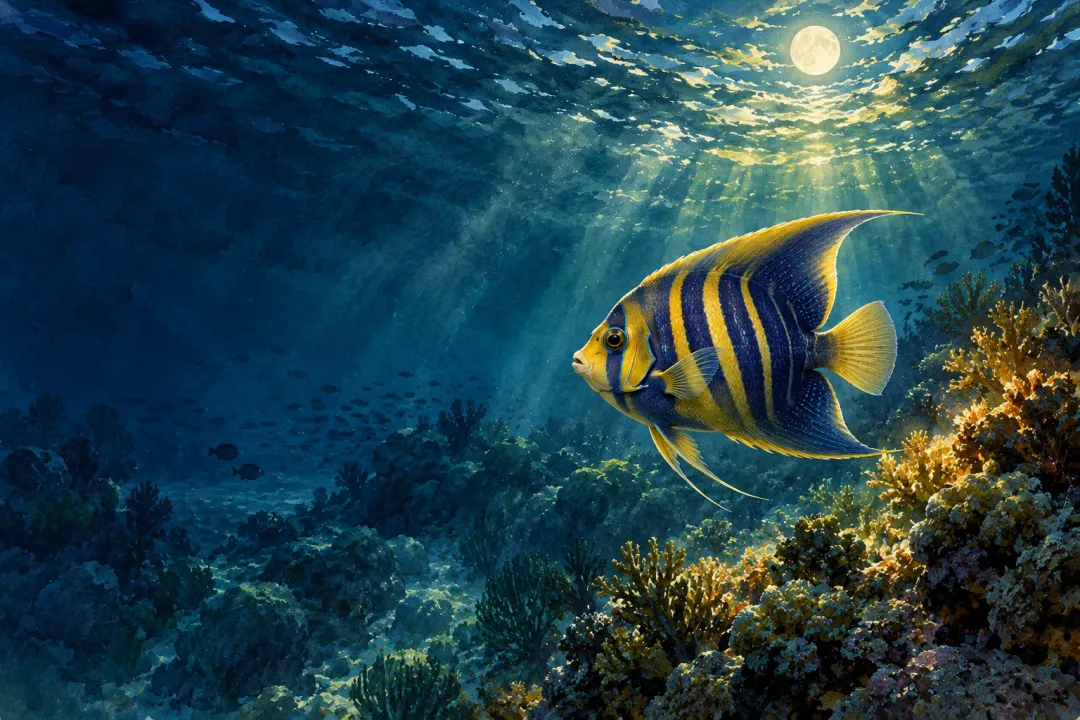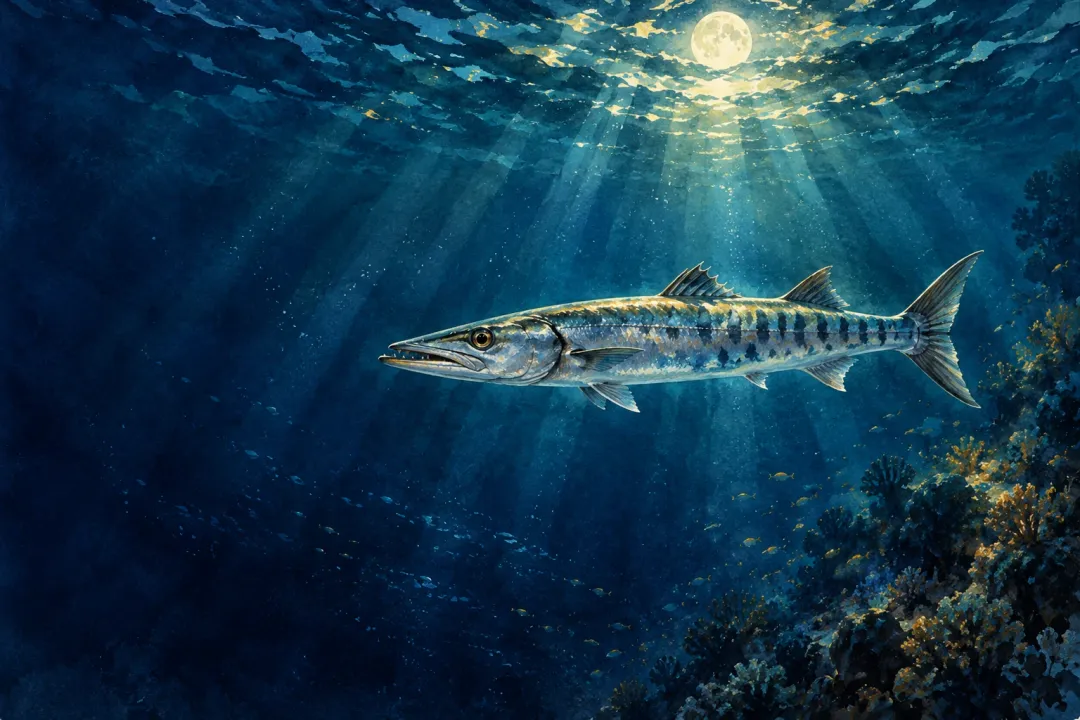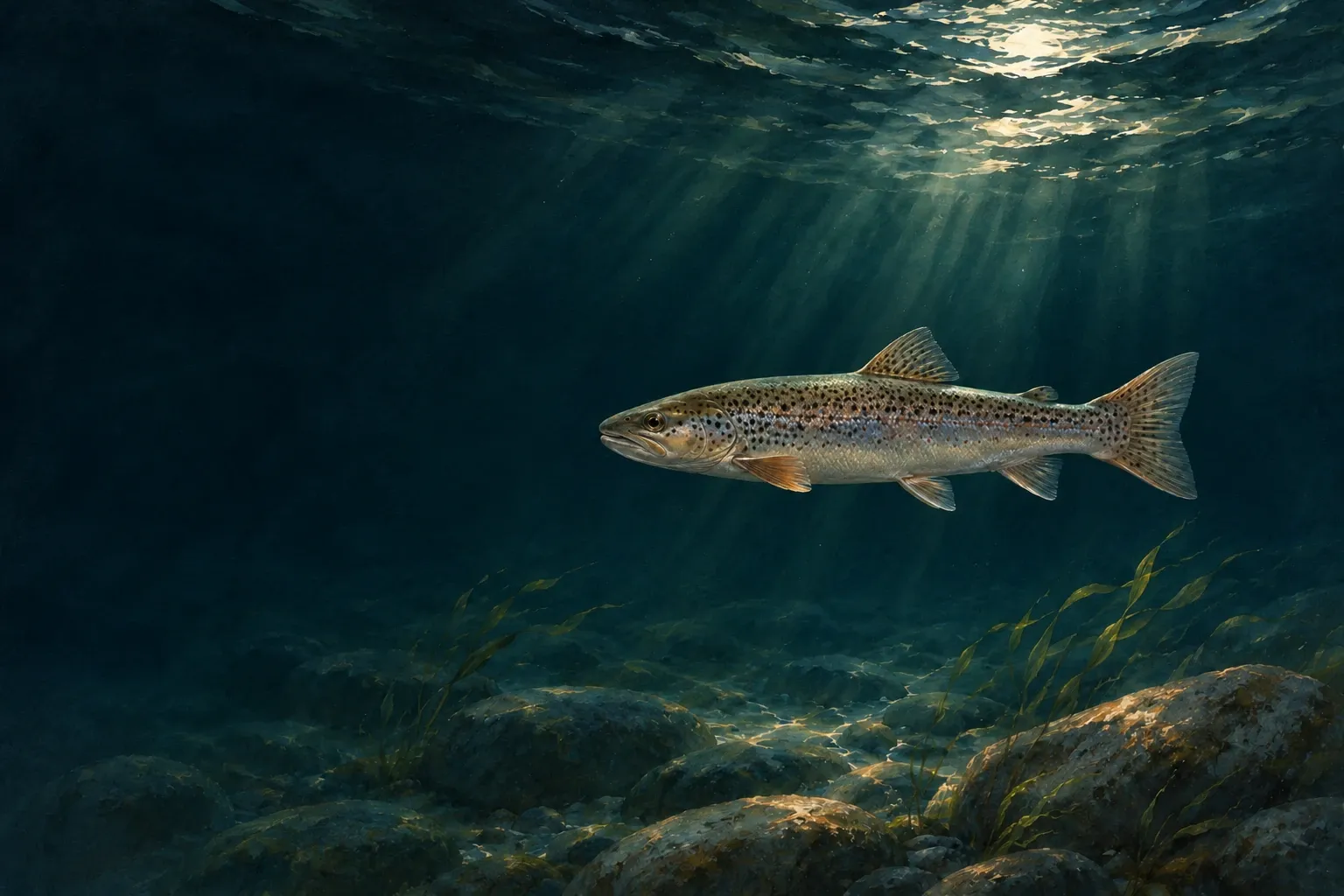
A fish turns in a river’s current, and the water moves over its body before the riverbank gives any sign of change. It can find a quiet pool, press upstream, or slip toward food drifting past. Fish carries a simple spiritual meaning: attend to what is stirring beneath the surface. Feelings, instinct, and the first faint turn of a situation can point toward the passage ahead.
The living current beneath your days
Fish belongs to water in a way we can only visit. Its gills draw breath there; its fins make small corrections against a flow that never holds still. That life close to water has long made fish a figure for emotion, the subconscious, healing, and the hidden sources of renewal. Its teaching is rooted in its own world: to live in water, a fish must keep sensing how the water moves.
A fish asks you to listen for the current under your first answer. A busy day can make feeling seem like a distraction, but feelings carry news about what is nourishing, tiring, or changing. Water wears stone through steady contact; fish reminds you that patient attention can shape a life as surely as a sudden decision. When fear or uncertainty clouds the surface, go deeper and notice what remains true beneath it.
Fish also brings together two natures that people often hold at once: independence and belonging. A fish can swim alone, while a school turns together and finds safety in its company. If fish is a lifelong kin to you, its nature is a reminder to keep your curiosity alive while staying close to the people who help you flourish. You can move with others and still feel your own direction.
When it is time to find new water
In a hard season, fish does not wait for the whole river to become calm. It reads the flow and moves through the passage it can find. Let that be the fish’s message when a familiar way has grown stagnant: notice where a little movement is possible, then follow it. When you need strength for a task, call on the fish’s quick adjustment to changing water; let instinct help you choose your next stroke, and let companions steady you when the current runs rough.
The salmon gives this lesson a long road. Atlantic salmon predominantly return to spawn in the river where they spent their juvenile lives, using their sense of smell to find the way. The journey suggests a kind of knowledge that grows through experience: a creature can travel far, then recognize the particular water that first shaped it. When you are far from your beginnings, fish holds the possibility of returning with more understanding than you carried away.
In Irish legend, the Salmon of Knowledge eats hazelnuts that fall into a sacred well and becomes a bearer of wisdom. Finnéces waits years to catch it, then gives the salmon to his young servant Fionn to cook. Fionn tastes a little while checking it, burns his thumb, and brings the finger to his mouth; through that small accident he receives the knowledge the poet had sought. Here, wisdom gathers in the living body of a fish and passes to someone alert enough to meet the moment. The story leaves room for patience and for the unexpected lesson that arrives while you tend an ordinary task.
What fish dreams may carry
A living fish moving freely may point to feelings with room to move, or a possibility beginning to come within reach. If you catch a fish, the dream may carry the sense of a connection or opportunity taken hold of. Eating one may suggest that you are absorbing a deep experience and making it part of yourself; Fionn’s taste of the salmon turns that image toward a sudden awakening of wisdom.
A dead fish may appear when you face something that feels spent, unpleasant, or difficult to accept. A fish out of water may speak to the strain of being far from the place where you know how to live. The dream may be showing a mismatch between your nature and your surroundings, or a feeling that has been left without the conditions it needs. Look at the fish’s condition and its water: lively, caught, stranded, or still. Those details give the image its own voice.
Fish in stories of faith and plenty
In early Christianity, the Greek word for fish, ichthys, served as an acronym for “Jesus Christ, Son of God, Savior.” The fish came to carry faith and sustenance together: a creature drawn from water, and a sign of the spiritual nourishment people sought in Christ. Its quiet shape could hold a whole confession.
Chinese speakers connect fish with abundance because the word for fish, yu, sounds like the word for surplus. That association gives the fish a place in wishes for plenty and good fortune. The image of fish offered as a wedding gift also appears in Chinese tradition, where koi can stand for devotion and a happy marriage. Goldfish, too, are linked with prosperity, wealth, luck, and abundance. These meanings belong to particular traditions, each finding in fish a sign of what sustains a household or a bond.
Fish moves on through dim water, feeling the river’s pressure along its sides. It does not need to see the whole way to sense a change and turn. When the surface goes dark, remember the fish: there is still a current to feel, and a passage waiting in the water.