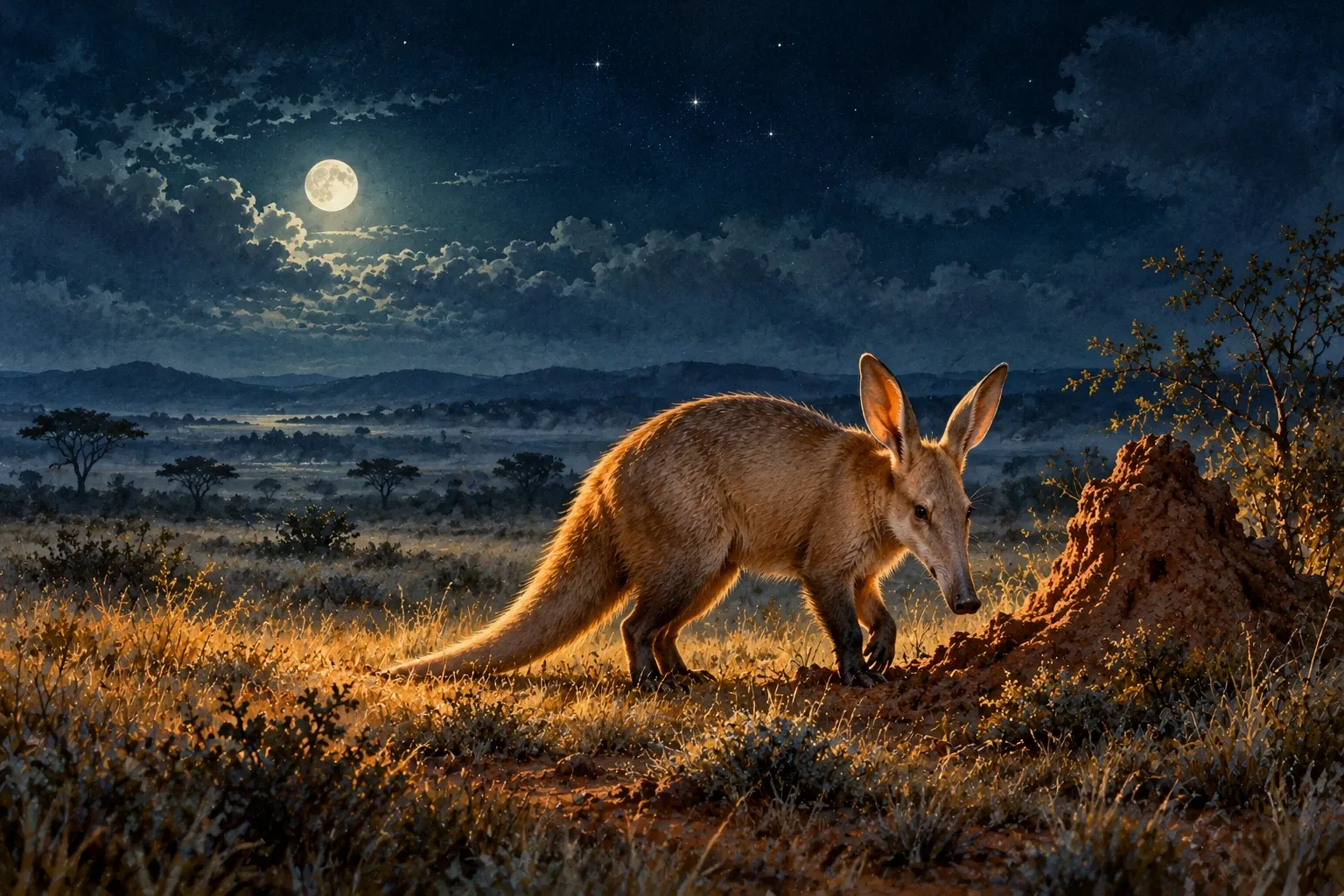
When the African night cools the ground, the aardvark leaves its burrow and follows the scent of termites. Its long snout works close to the soil; its powerful claws break open the mound. Before dawn, it will have eaten, and before the next day’s heat, it will be back underground. The aardvark’s meaning begins here: trust what your senses find, work patiently below the surface, and know when to return to shelter.
The aardvark’s quiet way of finding truth
An aardvark does not rely on sharp eyesight to find supper. It follows scent and sound, then digs where the food is hidden. Its medicine is careful attention: the truth often lies beneath the first appearance, and a steady search can uncover what hurried glances miss. When a situation feels unclear, follow the small clues. Keep asking what is actually there.
The aardvark works after dark, alone for much of its life. Its quiet is not emptiness; it is the time and space that let it do its work. When this animal comes close in a season of confusion, let the noise fall away long enough to hear your own instincts. Take new work and new bonds slowly, as the aardvark pauses to check the way before leaving its burrow. Move forward when the ground feels sound beneath you.
The animal’s body gathers features that might seem borrowed from elsewhere: long ears, a piglike snout, a strong tail, and a sticky tongue made for feeding. Yet the aardvark belongs to its own branch of life. It carries a lesson for anyone who has felt out of place: your own nature has a shape and purpose. The aardvark keeps going with its particular tools, without needing to resemble another creature.
A burrow for the hard season
An aardvark digs deep, with several entrances to its underground home. It can retreat from the heat and stay protected while predators pass above. When the burrow is empty, other animals can use it for shelter. The aardvark’s refuge is both a private home and a gift to the life around it.
In a difficult season, this is a kind of strength to carry: make a place where you can recover, and let your effort serve more than yourself. The aardvark’s way is self-reliant, but not barren or cut off. It leaves useful shelter behind. When you need courage for a demanding task, borrow its persistence: keep working at the earth in front of you, one firm stroke at a time.
The aardvark’s bond with solitude is part of its nature, not a failure of affection. A mother stays with her young as they grow, then the young animal leaves to live on its own. That pattern speaks of care that prepares another to go forward. If this animal has long been kin to you, its example is independence with room for tenderness: keep your own counsel, give care where it is needed, and let each life find its own path.
What Bamana farmers see in the aardvark
Among the Bamana of Mali, the aardvark’s earth-digging body appears in ci wara headdresses honoring a being credited with teaching people to farm. These headdresses combine features of several creatures that dig or work the ground. In this tradition, the aardvark belongs to a story of cultivation: the soil holds sustenance, and knowledge of the land helps a community thrive.
The aardvark’s own work gives this image its force. It opens hard ground to find food and digs shelter beneath the surface. Its story carries a respect for the patient labor that makes a living possible.
When the aardvark visits a dream
An aardvark digging in a dream brings attention to something you are working toward or longing for. If it digs with force, the dream points toward the value of effort honestly spent. Ask what you are trying to reach beneath the surface, and whether you are willing to keep at the work.
If the aardvark is eating, the dream turns toward nourishment and the relief of worry. Its feeding is a sign of needs being met and gladness returning. Two aardvarks can point toward a developing partnership; their unhurried, solitary nature suggests giving a new bond time to become familiar.
An aardvark prowling at night points toward an opportunity that takes persistence and self-reliance. Its path is made by following what it senses, not by luck. If it stands close beside you, the dream may bring a wish nearer in imagination, urging you to see what small, practical step lies within reach.
Follow the scent, then rest
The aardvark does not hurry across the open ground. It tests the night with its senses, finds what will sustain it, and digs its way home. Carry that image with you: a quiet animal at the edge of its burrow, listening, then stepping into the dark with purpose. Trust the clues you can smell and hear. Work steadily where the answer is buried, and remember that knowing where to rest is part of knowing how to continue.