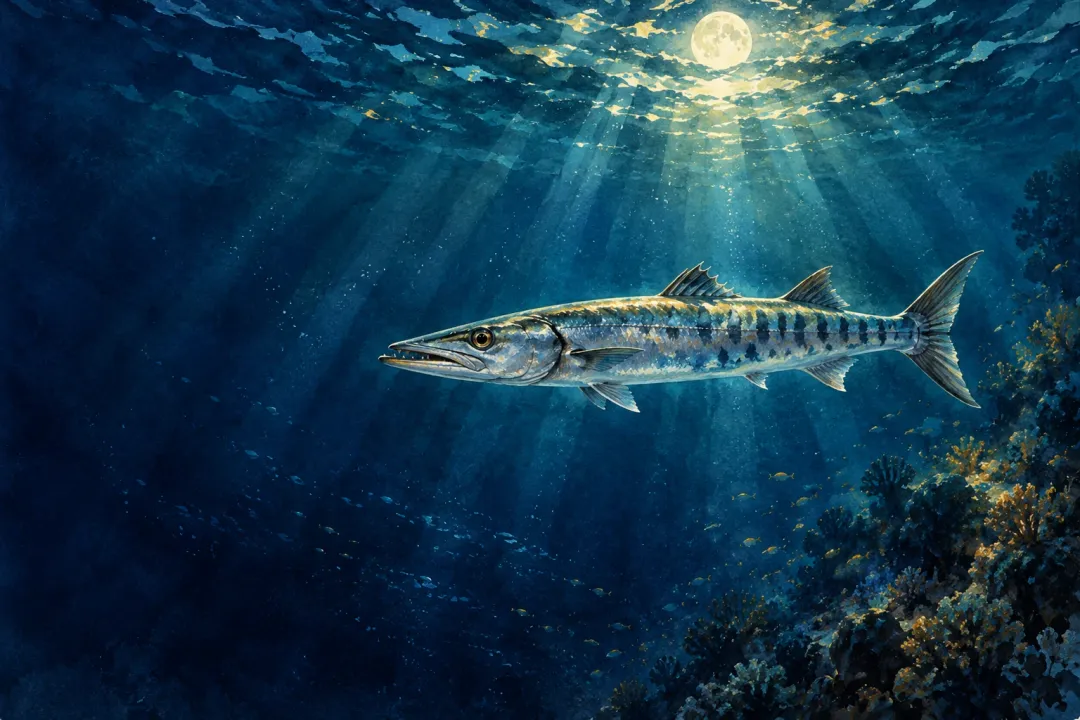
A catfish noses along a riverbed, its whiskers brushing the silt and tasting what its eyes cannot make out. A fallen branch offers cover; a sound travels through the water from somewhere nearby. The fish reads these small signs and goes on living in a world that stays dim. Catfish carries a plain teaching: when the way ahead is clouded, pay close attention to what you can sense, and let one clear sign guide the next step.
Catfish finds a way by feeling
The whiskers around a catfish’s mouth are barbels, sensitive organs that help it find food. Taste buds cover them, and catfish also hear well. A fish that spends much of its life near the bottom has reason to learn its surroundings in more than one way. It can listen for movement, feel along the riverbed, and notice what the water carries close.
When Catfish enters a season of your life, it asks you to listen for what is easy to miss. A repeated detail, a shift in someone’s voice, or a quiet thought that returns can tell you where to look. Catfish does not need a bright, open view to find its next meal. Let close observation do its work before you settle on an answer.
Some catfish shelter in deep holes or beneath logs and other wood in the water. The fish can be solitary, often active at night, and comfortable in places where light reaches poorly. That nature speaks to the person who finds an idea by sitting alone with it, then brings it to others in a steady, generous way. Catfish has many ways of making itself known: sound, touch, movement, and taste. Its kinship belongs to someone whose inner life has more than one language, whether that is conversation, writing, painting, or time spent quietly thinking.
Catfish also reminds you to stay flexible when a familiar route stops serving you. Different kinds live in inland waters and coastal waters, and the walking catfish of Southeast Asia can use its fins to move across land for a short time in search of food or a better place to live. A change of ground does not end the journey. Catfish lends the willingness to try another path and keep your senses open while you find it.
What Catfish lends when the water turns rough
Catfish has endured for millions of years and lives in a wide range of waters. It is a bottom feeder, taking food from the places where other things settle. Its survival comes with a strong appetite and a body suited to its own way of life. If you call on Catfish for a difficult task, its strength is practical: stay alert, take in what the moment offers, and keep enough endurance for the longer passage.
When a problem feels too large to understand, think of a fish working through the riverbed one mouthful at a time. Break the difficulty into parts and see what each one contains. Catfish lives among what is buried, fallen, or breaking down; the old matter in a river can become part of what sustains life. Its story holds renewal close to decay: something can be finished and still nourish what follows.
The fish’s feelers also make it a companion when you need to test a story that sounds too grand or uncertain. Catfish listens and senses before it acts. Gather the details that are actually there, and ask a direct question. When a creative idea seems stuck beneath layers of habit or worry, search the neglected corners first. Catfish often finds its way in places other creatures pass over.
Catfish lays many eggs, and in some species the male guards them; the hardhead catfish holds its eggs in its mouth while they develop. The fish’s family life carries both abundance and care. It ties fertility to effort and protection, whether you are tending a new project, a household, or an idea that needs time to grow. Catfish asks for steady attention to what you have begun.
Catfish in dreams
A catfish in a dream can point to something that is difficult to see plainly. If it appears in murky water, consider what in your life has stayed partly hidden. The image may be a reminder to look carefully before trusting an appearance or drawing a conclusion.
A catfish swimming upstream suggests resistance and self-doubt: the fish is working against the current, and the dream may echo a struggle to trust your own direction. When it swims with the river, the image turns toward compromise and movement made easier by accepting the current’s course. The fish’s direction matters; notice whether it is straining against the water or traveling with it.
If a catfish opens and closes its mouth without making a sound, words may be held back. This is a fish that senses much through its mouth and barbels, yet the dream’s silent mouth turns attention to speech that has not found its way out. Think about what you need to say, and choose a way to say it plainly.
Follow the signs close at hand
Catfish tastes the water, hears what moves through it, and feels its way past silt and fallen wood. Its world is not empty because it is dim; it is full of signs that require patience to read. Keep the fish in mind when your own path grows cloudy. Brush the riverbed with your attention, listen for the sound that comes from ahead, and trust the next true signal to carry you onward.