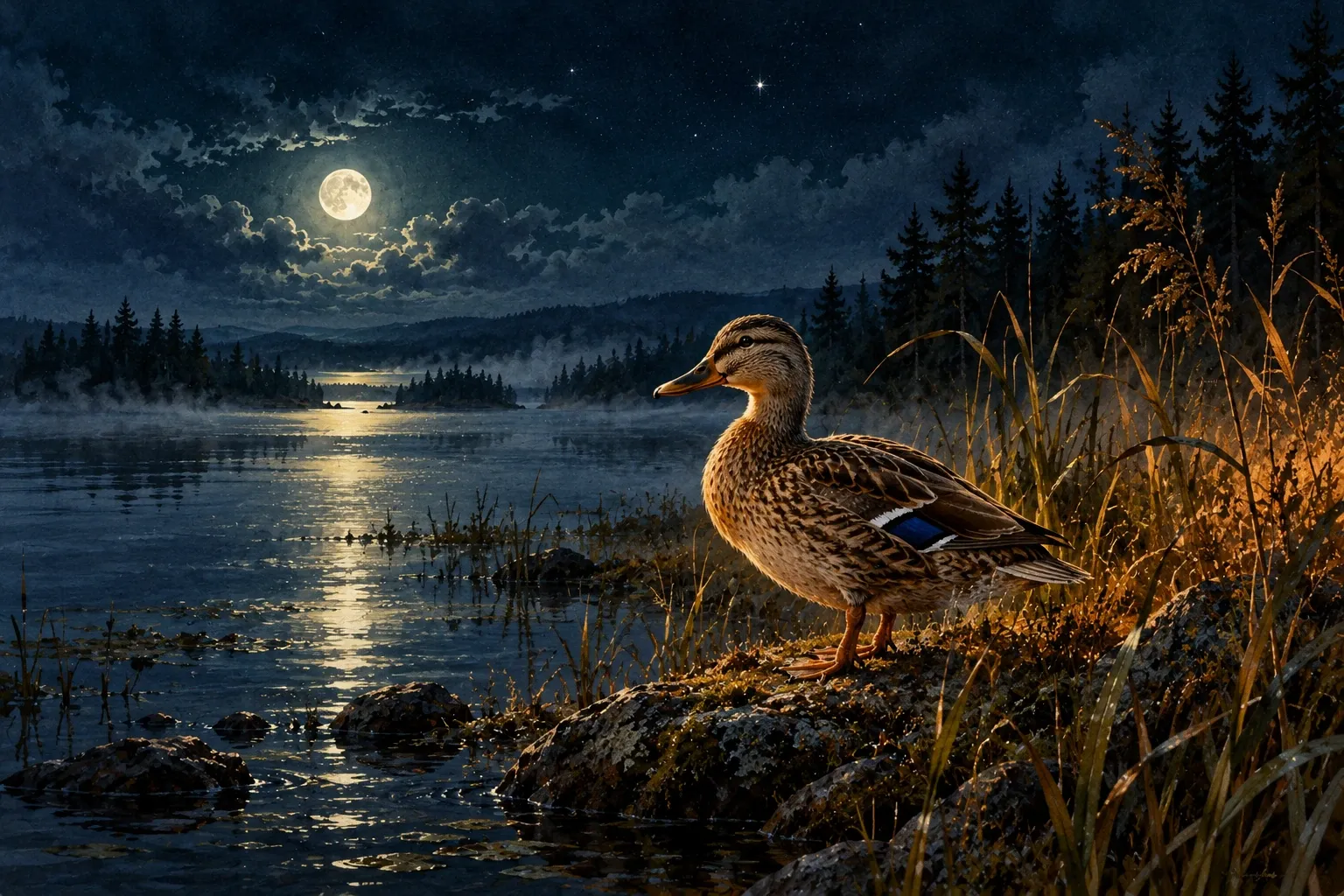
A duckling leaves its hollow tree with its mother and steps into water it already knows how to paddle. The duck’s life moves between air, land, and water, and its central teaching is just as sure: stay close to what sustains you, and learn to move through changing currents without losing your footing.
Ducks gather in rafts, call to their young, and rest on the water with watchful eyes. They show how tenderness and alertness can live together. Their meaning is one of emotional comfort, protection, adaptability, and the quiet ease of belonging.
The duck’s spiritual meaning
A duck floats with its body held lightly above the surface, though its feet keep working below. That sight has long made it a companion for feelings that are real even when they remain unseen. When the duck appears in your thoughts or along your path, look beneath the first impression. What you show the world is only part of your life; deeper feelings, old memories, and unspoken needs also ask for care.
Ducks dive for food and rise again. They remind you to go below the surface of a hard feeling, find what is nourishing there, then return to the day with greater steadiness. The water does not ask the duck to become dry before it can move forward. It teaches a gentler way: feel what is here, and keep your balance as you pass through it.
A duck also knows the value of its own element. On land it can seem awkward; on water it is at ease. When life feels uncomfortable, notice whether you are trying to thrive in the wrong surroundings. Duck asks you to seek the people, work, and daily habits where your nature can settle and breathe.
Following the duck through a changing season
When the duck comes as a guide for a particular season, it brings the courage to enter what is already before you. Ducklings follow their mother to the water and take to it with confidence. You can meet a new beginning one step at a time, trusting that practice and instinct will carry you farther than hesitation.
A lifelong kinship with duck has the nature of a raft: sociable, expressive, and attentive to family and friends. Ducks call to one another and keep their young close. That bond teaches you to stay in touch with the people who steady you, and to offer your own voice when someone needs to find the group again. Easy company and laughter belong to this kinship too. A duck’s busy little motions can lift the mood without asking life to be grand.
For a task that needs patience or composure, call on the duck’s steady presence. Ducks rest on water, preen their feathers, and keep watch; they teach you to tend to yourself while keeping a clear eye on what is happening around you. The duck’s wide field of vision makes alertness part of its strength. Speak plainly when your needs matter, then let small slights pass like water over oiled feathers. Keep your attention for what deserves it.
Ducks in stories and tradition
In ancient Egyptian religion, duck belonged to the sacred world of Isis, and images linked the bird with the Nile and with fertility. A duck could stand at the meeting of water, land, and life-giving abundance. In ancient Greek stories, ducks rescued the infant Penelope after her father cast her into the water. Her story joins the duck with protection and with the pause that can keep a hasty act from becoming final.
When a duck visits your dreams
A duck flying in a dream carries the feeling of release and a wider view. If it walks, swims, and flies in turn, the changing scene points toward your ability to adapt, even when you have doubted it. A duck that stands utterly still can reflect a moment when you feel exposed or unable to act, like a sitting duck.
Ducklings floating on water bring the image of a beginning taking shape, with a note of joy. A duck with its chicks puts care and the company of younger people close to the heart of the dream. If a flock gathers, its many moving bodies suggest improvement through shared effort; if the ducks crowd or swarm around you, tension among a group may be weighing on you. Two ducks together often carry the image of partnership or marriage.
Keep the duck’s balance
The duck moves between feeling and action. It dips beneath the water, rises into the air, and returns to its companions. When you remember it, picture that small body resting on a pond while its unseen feet keep the water moving. Its teaching is to stay tender, stay watchful, and trust the way home to your own element.