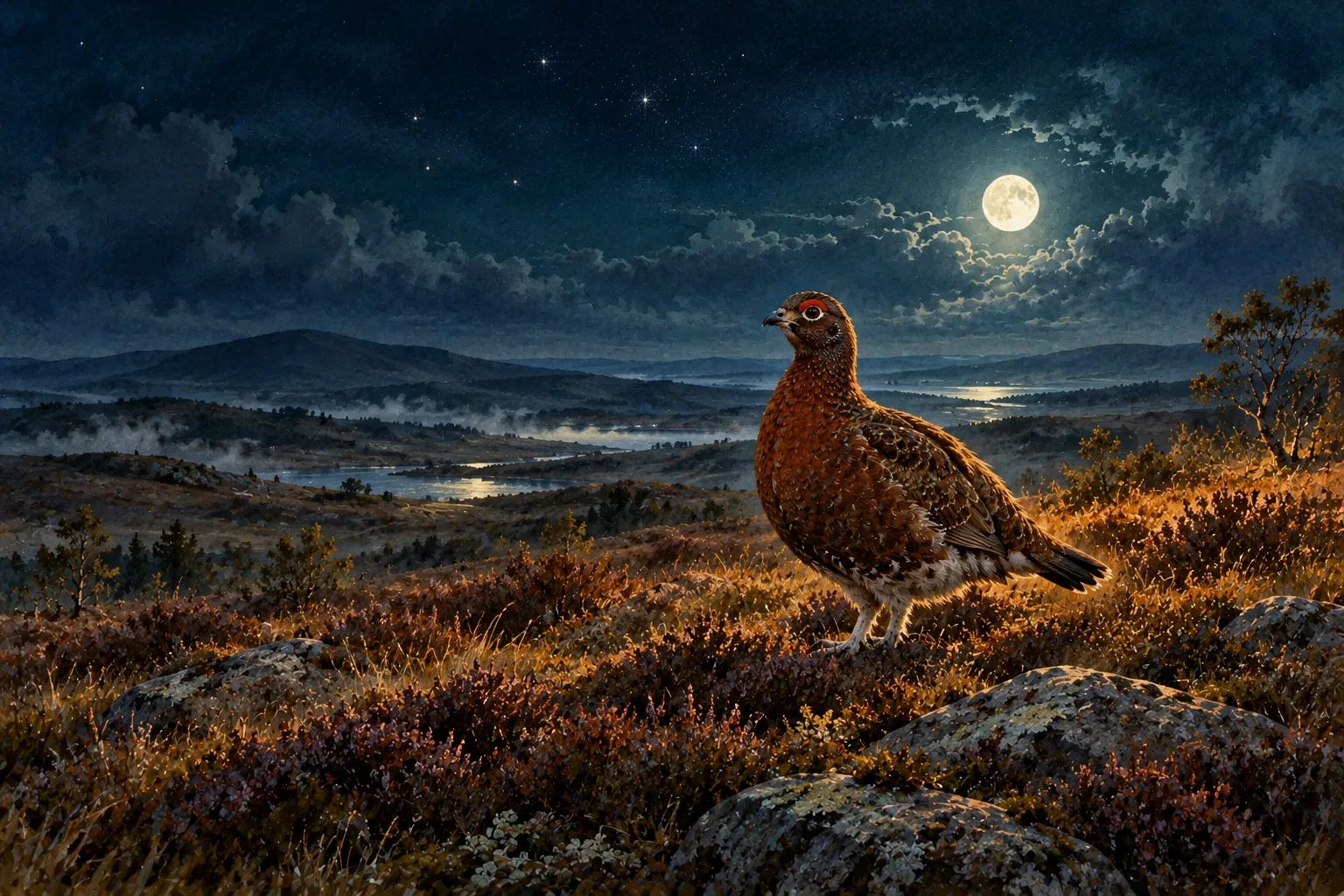
A ruffed grouse can make a forest sound as though a drum has started beating inside a hollow tree. The bird lifts its wings and hammers them against the air, faster and faster, until the notes merge into a rolling thrum. Then it slips back into the brush. Grouse carries both gestures: a bold rhythm that calls life forward, and a quiet retreat that keeps life safe. Its teaching is to know when to sound your presence and when to shelter what matters.
When the grouse drums and turns
In spring, a grouse gives its courtship display on familiar ground. The male fans his tail, raises his body, and drums with his wings; in open country, grouse gather on shared display grounds, while the ruffed grouse performs alone. The old places matter. The same ground can hold a season’s return, a ritual renewed, a body finding its own beat.
Grouse teaches that rhythm is something you make with your whole life. When a season feels stuck, let movement begin the change: walk a winding path, tap a steady beat, or move without planning each step. Keep your attention on one intention as you go. The grouse does not drum by wishing the air into motion; its wings do the work.
The spiral belongs to this lesson because the grouse’s display can circle and turn, and because returning to a place can bring you around to it with new strength. A labyrinth walk, a slow turn, or a repeated prayer can gather scattered attention. Let each step carry the next one. Grouse lends the resolve to give a new rhythm a real place in your day.
The grouse’s shelter and the space it keeps
Most of the year, grouse are solitary birds. In deep winter, some burrow into snow, where the cover insulates them from bitter wind. Their feet grow fringes that help them travel across the snow. The grouse’s retreat is active wisdom: it finds shelter, saves strength, and waits out a hard season.
When life crowds you, grouse says to protect a small, dependable patch of quiet. A closed door, a walk alone, or a few minutes without voices can be enough. It also teaches that solitude is not a permanent wall. Grouse leave their solitary ways to court in spring; when you have rested, return to the people you trust and let them see you.
Grouse also holds its territory. Its display makes presence visible and unmistakable: tail spread, feathers raised, wings beating. Let that bird’s clear posture lend you firmness when a boundary needs to be spoken. Name what you can give, what you need to keep, and the ground on which you can stand without apology.
The hen grouse offers another kind of courage. When danger threatens her young, she may rush at the intruder or feign injury to draw it away. Her bravery is quick and practical, fitted to the moment. Carry that protective instinct into a hard task: choose the action that guards someone vulnerable, even when it asks you to be bolder than usual. Then, when the danger passes, return to tending what you meant to protect.
What grouse dreams bring close
A grouse appearing in a dream may bring the question of how near or far you want to be. If you chase one, the dream may point toward a desire that keeps receding as you pursue it. If the bird moves away, it may echo a relationship changing its distance. A grouse that comes toward you can suggest an opening around work or resources, while a flock may picture a life with several kinds of connection around it.
A dancing grouse makes the dream’s meaning more public: someone’s display, invitation, or wish to be noticed may be entering your awareness. If several birds dance together, the image can carry the lightness of celebration and flirtation. A caged grouse released from its cage may mark a readiness to let go of something you have been trying to hold in place. Two grouse nesting together bring an image of companionship finding a home.
These dreams keep the bird’s characteristic movements at their center: approach, retreat, display, release. They do not promise that a wish will be granted or a bond will last. They show the shape of a question as plainly as a grouse leaves its tracks across new snow.
A dance remembered by the Blackfoot
The Men’s Chicken Dance originates with the Blackfoot people, and it is a slow mating dance that shows off the prairie chicken.
Grouse returns us to that meeting of solitude and shared life. Beneath the snow it waits in shelter; in spring it drums and turns on familiar ground. Keep both rhythms: the quiet that preserves your strength, and the brave, beating wings that let the world know you have come alive again.