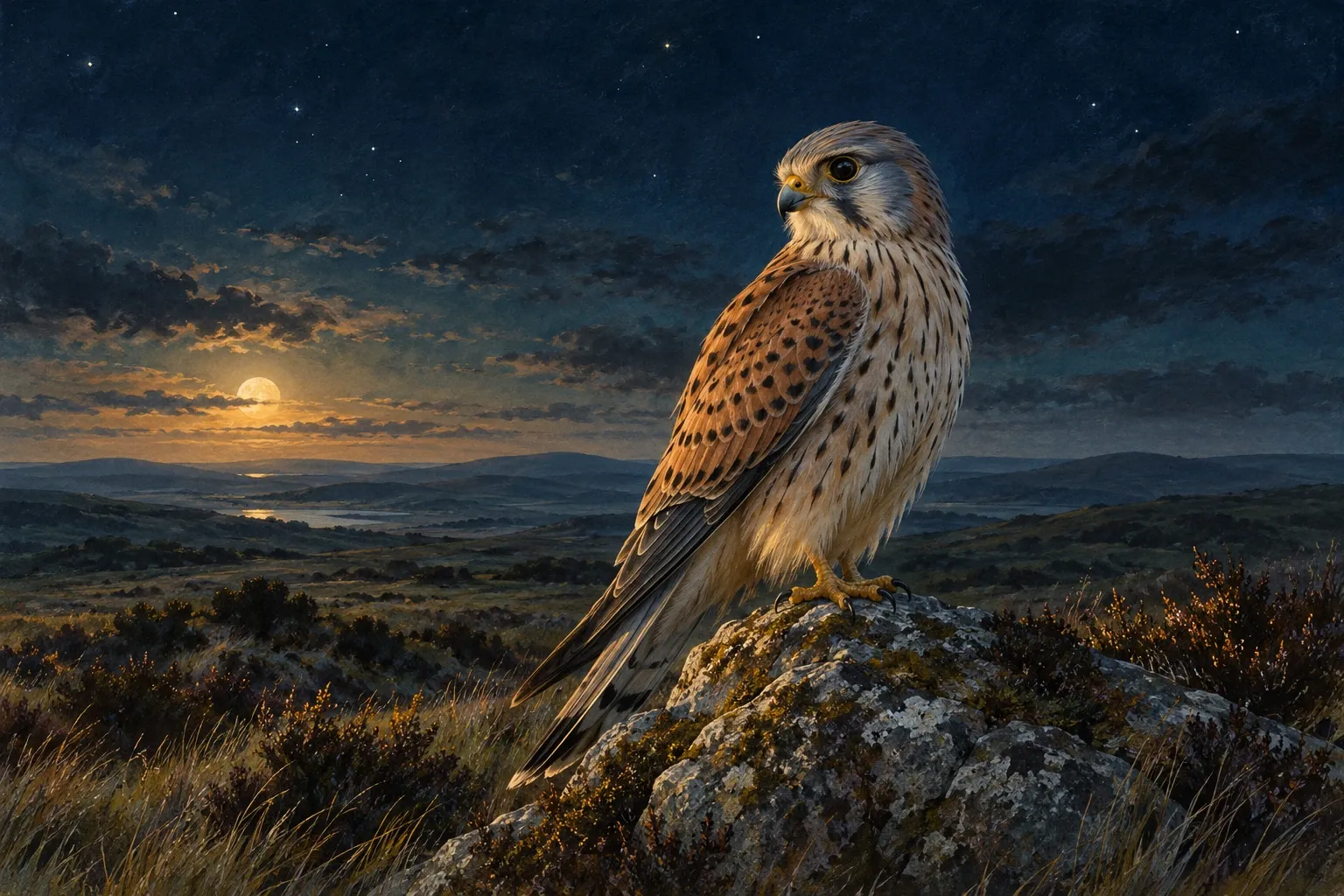
A kestrel hangs above an open field, its wings beating against the wind as it watches the grass below. Then it folds into a swift descent toward a beetle or mouse. The stillness and the plunge belong to one act: first the bird sees clearly, then it commits. Kestrel carries the meaning of a mind that can move quickly because it has learned to wait.
The patience inside a quick mind
A kestrel hunts from a perch, shifting between lookouts as it watches and listens. It may hover above its prey before dropping, a rare skill among birds. Its speed is guided by attention and control. Kestrel teaches you to let clear seeing shape your next move, then to act fully when the moment is right.
When a season presses you to decide before you are ready, the kestrel holds its place in the air and keeps watch. Set your attention on the aim that deserves your effort. Let the noise around you fall away long enough to see what is actually happening. When the opening appears, move with the same clean purpose as the bird’s dive.
People who feel a lasting kinship with kestrel often prize a wide view. The bird perches alone and studies open ground, and its nature is alert, graceful, and quick to understand. A broad perspective helps it choose where to hunt; the same kind of attention can help you notice how the pieces of a difficult situation fit together. Its lively mind is strongest when patience gives it direction.
The kestrel also knows how to stop in flight. It hangs in place above the ground, holding its position until sight and timing agree. That unusual pause is a lesson in using speed wisely: quick thought does not mean hurried judgment. Keep a plan in view, and allow yourself to pause long enough to make the next move accurate.
A watchful life, shared with others
Kestrels live in open country near woodland and also make their homes in cities. They hunt grassy patches, roadside edges, and other places where small prey can be found. Grasshoppers, beetles, mice, and other small rodents feed them. The bird’s place may change, but it keeps finding a perch from which to observe and a clear path to its food. Kestrel’s steadiness comes from adapting its watchfulness to the ground beneath it.
When work calls for a new direction, the kestrel lends the strength to see the wider pattern and move with confidence. It does not plunge at every passing thing. Hold your attention on the task that matters, and let a sound plan guide your speed. Once you have watched long enough to know your course, act with the bird’s commitment.
Kestrels also show how attention serves a family. The female tends the nest while the male brings food. After the chicks make their first flight, their parents continue feeding them; the young later hunt in groups as they develop their skills. The adults divide the work, and the young learn in company. In kestrel’s nature, independence and shared care belong together: ability grows through practice, and strength includes tending what is still learning.
A pair’s courtship carries its own plain signs of devotion. The male rises high, calling; the female drifts with measured wingbeats, and he offers her food as he passes. Pairs may remain together for years, and in a settled community they may use the same nest from season to season. Kestrels choose simple homes, such as tree hollows or abandoned nests, and keep watch from a perch nearby. Their constancy is made of repeated acts: returning, feeding, guarding, and sharing the work of raising the young.
When a kestrel visits a dream
A kestrel gliding through the dream sky can point toward freedom and a lighter passage through life. The bird’s open flight carries the feeling of release: the ground loosens its hold, and the air opens a way forward. The image can bring a moment of ease, like a body remembering how to move with the wind.
If a kestrel sits atop a pole, the dream turns to its watchful nature. The bird has settled on a lookout, observing before it moves. This image suggests pausing to reconsider a plan, especially if circumstances are changing. Look again at the ground below before continuing.
A kestrel can also appear as a helpful person, often someone with authority, who helps you through a difficult situation while preserving your dignity. Its presence in that dream carries the bird’s clear sight and composure into a human form: help arrives with a view of the way through.
The moment the kestrel chooses
The kestrel’s gift is the balance between a watchful pause and a swift, accurate response. Picture it above the field, holding against the wind, its eye fixed on the grass. It waits until seeing becomes knowing. Then the bird folds its wings, and the still sky turns into motion. Keep that image close: patience is not lost time when it brings the right moment into focus.