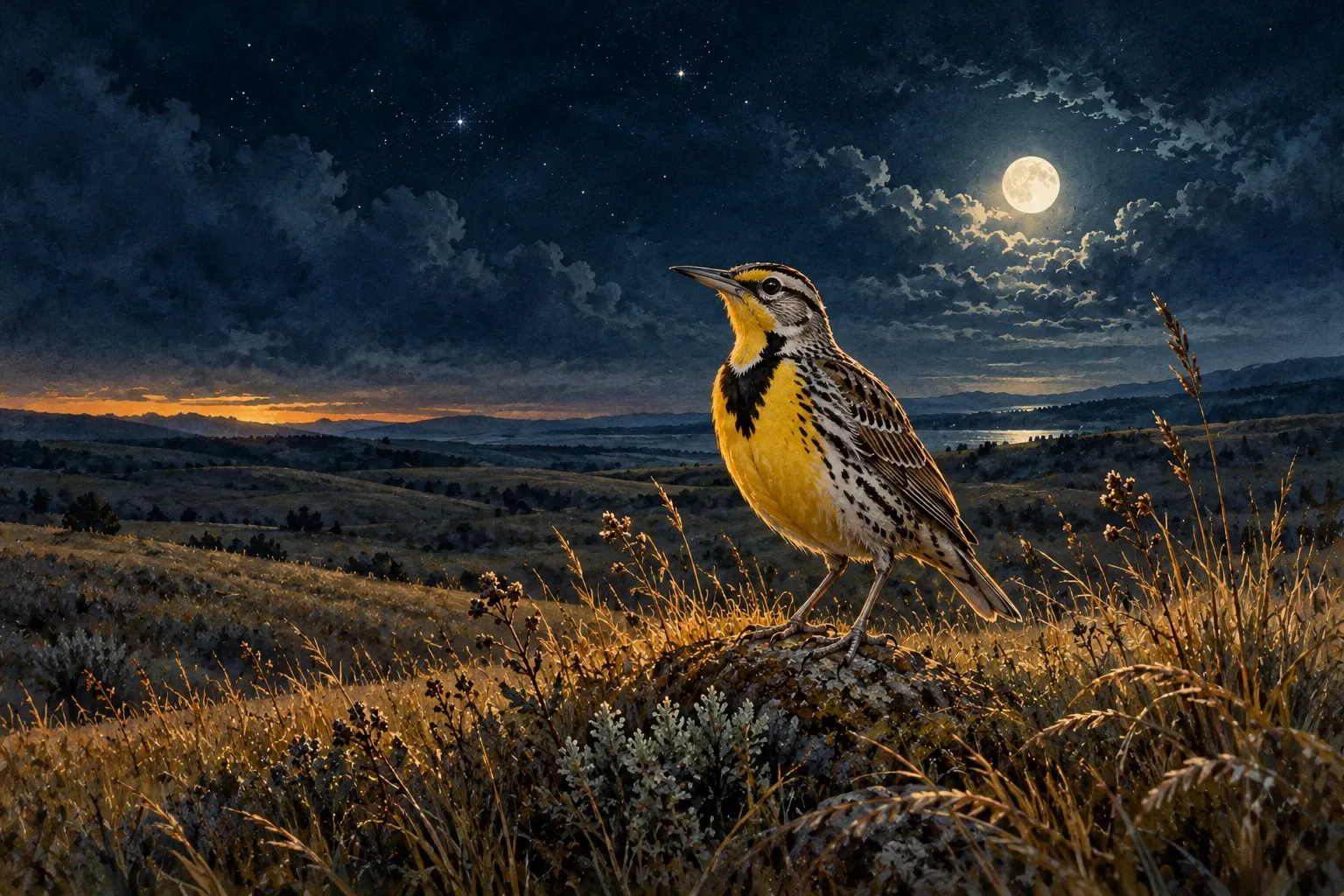
A meadowlark walks through the grass, then rises with a bright, tumbling flight, its song still ringing in the open air. The yellow breast and dark V flash above the meadow before the bird settles again near the ground. Here is the meadowlark’s heart: stay close enough to yourself to hear your own song, and carry it with you as you go. Its meaning is a cheerful journey inward, where the path itself can bring joy.
The song that travels with you
The meadowlark does not save its music for a quiet perch. It sings in flight, carrying its clear notes over open land. Let that be its first teaching: joy can accompany you through change. When life feels dim or your hopes have grown tired, the meadowlark’s song calls you back to what still gives you pleasure, however small—a familiar tune, a walk in daylight, a task done with care. The bird offers encouragement, not a promise that every trouble will vanish.
Its life joins earth and air. Meadowlarks feed on the ground, walking through grass for seeds and insects, yet they lift into the sky to sing and travel. Their nests rest close to the earth, sometimes tucked beneath a roof of grass. The bird’s inward journey is not an escape from ordinary life. It is a closer acquaintance with the thoughts, instincts, and abilities that have been waiting beneath the noise. Look within with the same ease the meadowlark shows on the ground; then let what you find rise into the open.
The bright breast and dark marking give the bird a striking sign to carry. Seen as a spiritual emblem, its yellow suggests hope and clarity; the V-shaped mark calls to mind a choice and the resolve to follow a path. The meadowlark keeps that brightness close to the earth, where it can be lived, not merely admired. It teaches that cheerfulness can be steady and grounded.
A nature that meets the season
When the meadowlark comes as a spirit guide, imagine it singing over a stretch of ground that has felt too long and quiet. Its message belongs to the season when you are discouraged and need to find your way back to your own voice. The bird still searches the grass for what will sustain it, and it sings while it flies; it lends you the courage to keep tending to daily life while hope returns. Choose what matters and give it your attention, as the meadowlark keeps its feet on the ground and its song in the air.
A lifelong kinship with meadowlark carries this same balance. The bird is alert to its open surroundings and comfortable close to the earth, yet it knows when to take wing. Its nature joins sociability with a private inward life: it sings out into the world, then returns to the grass. This kinship favors someone who shares their gifts freely and stays attentive to the ground beneath them. When a new season calls for movement, meadowlark lends a flexible step and a willing heart.
Call on meadowlark’s strength when you need to begin again, find your direction, or share your voice. It sings through flight and walks as it feeds; its example is to let inner conviction travel into action, one grounded step at a time. When a project has been slow, keep tending it. When you have lost your tune, start with a song you love. The meadowlark’s gift is a lighter spirit that can still face the work ahead.
When meadowlark visits a dream
A meadowlark flying freely beneath a bright sky points toward hope and a change of fortune; a goal may be nearing its harvest. If it lands before you, the dream counsels discernment: a pleasing first impression can make you overlook what deserves a closer look.
Following the bird suggests that you are on a promising course, with a journey or new experience ahead. A singing meadowlark carries the possibility of a happy change at home. If it moves among the grass, the dream turns attention to practical security and the small matters that keep life steady. A wounded bird speaks of sadness or a tender loss of innocence. Its song heard from a nearby tree can herald welcome news or an invitation.
Stories held in the meadowlark
The Sioux honor meadowlark as a sign of devotion and friendship, and hear its song as fortunate. In Lakota stories, the bird carries messages from the Creator; it is also linked with Okaga, the spirit of fertility and the South Wind, whose warmth belongs to harvest and new life. The Arikara name for meadowlark carries a sharper edge, likening its speech to a woman’s scolding. These meanings belong to different peoples and tell different stories; together they show how a familiar song can be heard as comfort, a message, or a rebuke.
In a Blackfoot story, Meadowlark carries news of good things among living beings, and the Creator gives it its yellow breast and dark necklace as a visible gift. The bird’s kindness to its relatives earns the blessing. Its bright colors, then, are more than decoration in that tale: they remember the good that a messenger brings to the community.
The meadowlark keeps walking through the grass, gathering what it needs, then rises into the air with its song intact. Its path does not ask you to hurry toward a far-off answer. It reminds you to stay near the ground of your own life, listen for the music already there, and let that music travel with you across the meadow.