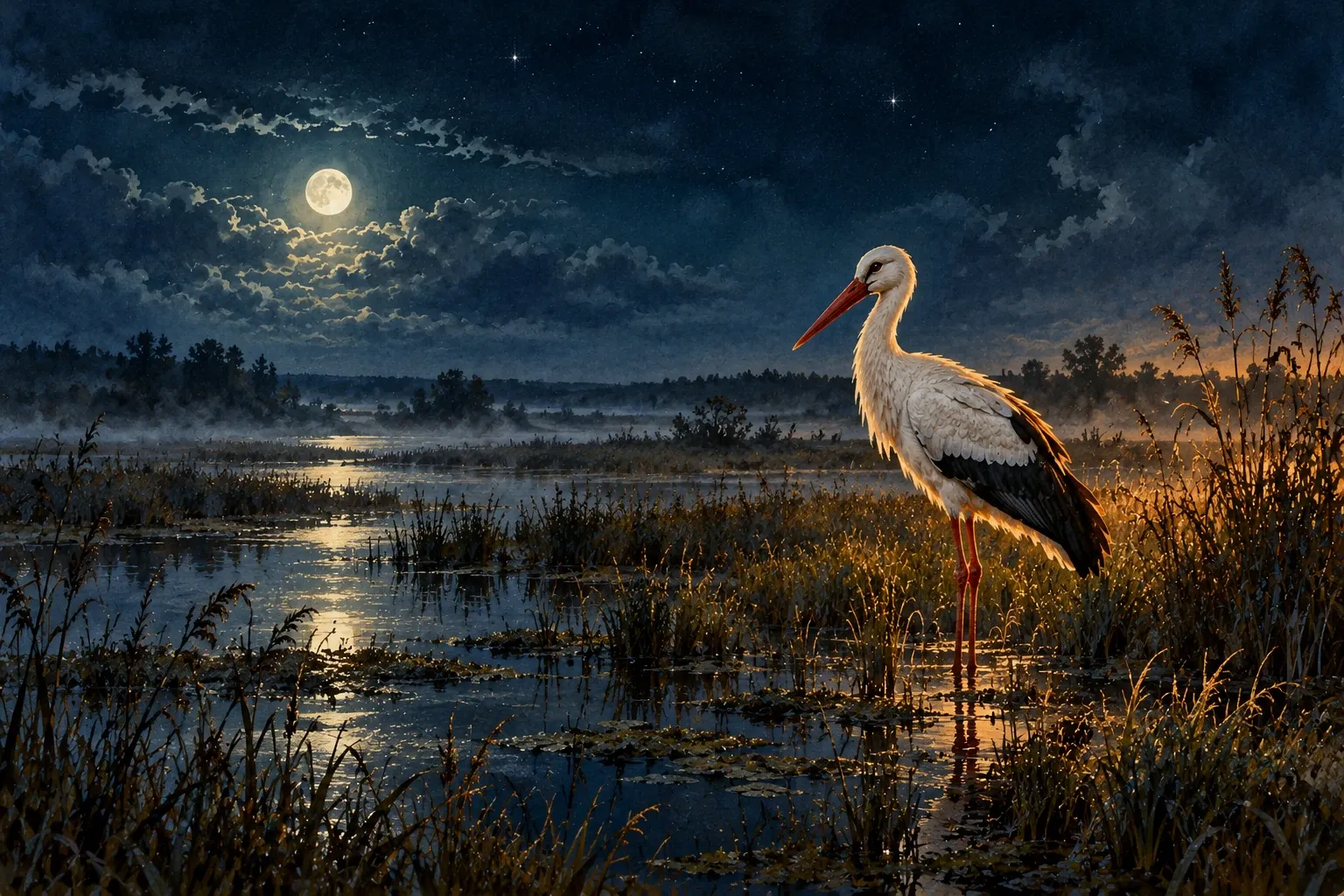
A stork stands in the shallows, still as a reed, its long legs planted while it watches the water. Then it lifts its broad wings and climbs on a warm current, saving its strength for the long journey ahead. It knows how to wait, how to return, and how to keep watch over a nest. Stork carries the meaning of renewal: the kind that begins with patience and grows through care.
The stork brings new beginnings home
Each year, storks travel between wintering grounds and breeding places, arriving when the season turns. Their return has long made them a sign of spring and fresh life. The old story of a stork carrying a baby gives a tender shape to that hope, but the bird’s deeper lesson is wider: a beginning needs a place to land. A nest must be built, guarded, and tended before anything can thrive.
The stork’s nest is a great structure, often used again from year to year. A pair settles into this familiar home and raises its young with attention and defense. Stork teaches that creativity and family life both need steady ground. A new project, relationship, or way of living deserves the same thoughtful tending as a nest: give it time, protect what is taking shape, and return to it faithfully.
Stork also carries the feeling of coming home with new eyes. You can revisit the place or people who shaped you and see what has changed in you. Care for the foundations that still hold you, and let a new season begin from there.
A watchful nature, a quiet message
Storks make much of their meaning through posture and movement. They may clatter their bills, stretch their wings, or move in courtship displays, but their message is not carried by speech alone. Their long necks and patient gaze suit a bird that observes before acting. When Stork comes close in a difficult season, it reminds you to quiet the noise and look carefully at what is already happening. A calm stance can say what hurried words cannot.
The stork is fiercely attentive to its nest. Its protection is a form of devotion: it stays close to what is vulnerable and gives the young a safe place to grow. Let that nature guide you when your home or family needs care. Stand watch, make your boundaries clear, and offer support that helps another grow in their own way. The nest is a shelter, not a cage; the young must eventually find their wings.
Stork’s yearly return also speaks to lasting kinship. If this bird feels like a lifelong companion, its steady nature points toward loyalty, patient care, and the ability to begin again after a hard stretch. For a task that asks for clear judgment, borrow its way of crossing a great distance: rise above immediate trouble, find the current that will carry you, and spend your strength where it matters.
What a stork may bring in a dream
A stork carrying a baby may point toward a birth or a new beginning taking shape. The image can hold joy and hope, especially when something in your life is ready to be welcomed and cared for.
Two storks may suggest a partnership built on shared effort. A wounded stork can turn attention toward someone in the family who needs care. If a stork circles above you, the dream may point toward calm and confidence returning after a period of uncertainty.
A stork gliding freely in sunlight carries the promise of a happy gathering or celebration. When it appears restless or flustered, the dream may reflect an opportunity you have not yet faced clearly. The bird’s watchful stillness offers another image to carry forward: pause, look closely, and let the next step become plain.
Storks in old stories
In ancient Egypt, people connected the stork with the ba, a spiritual aspect of the person that could travel beyond the body. The ba was represented as a bird with a person’s head. The stork’s migrations made it a natural image for a soul that journeys and returns.
The Greeks and Romans linked the stork with care for the home and family. Hebrew tradition also gave the stork a name understood as “kind mother,” honoring its devoted care of its young. These stories grew from the same plain sight: a bird returning to its nest and standing guard over the life within it.
In Chinese traditions, the stork shares associations with the crane, including longevity and wisdom. A stork in a pine tree joins the bird’s long life with the evergreen tree’s endurance. Each tradition gives the bird its own meaning, yet the image of endurance and renewal remains close to its habits.
When the stork rises from the water and finds a warm current, it does not hurry the sky. It spreads its wings, lets the air lift it, and keeps its course toward home. That is Stork’s teaching: build what needs shelter, protect what is beginning, and trust the season’s return.