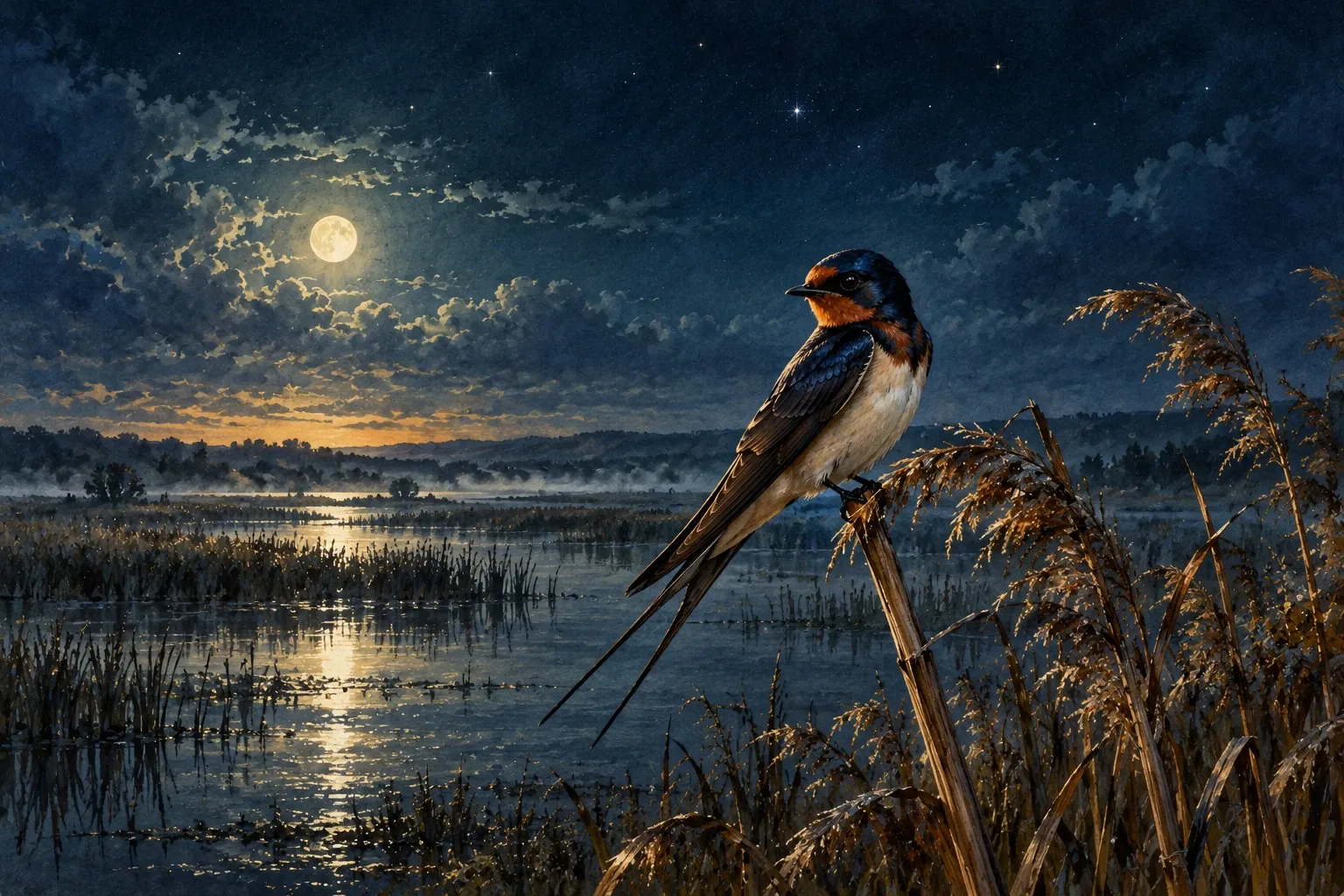
A swallow cuts across the spring sky, catches an insect on the wing, and slips back beneath a roof where its nest waits. When the cold comes, it travels toward warmth; when the season turns, it finds its way back. The swallow’s meaning lives in that joining of distance and return: lift above what has grown small and tangled, then bring your care home to what matters.
The swallow’s clear view
The swallow spends its strength in the air. Long wings and a forked tail let it turn quickly after flying insects, and it can glide when it needs to save energy. It has little use for the ground. The bird’s flight becomes a picture of perspective: when you circle the same old grievance or fret over every small irritation, rise far enough to see the whole shape of things. The swallow asks you to look past the nearest obstacle and find the clean line through it.
Its open mouth is wider than its small bill suggests, and the bird takes insects as it flies. That contrast carries a quiet lesson about listening and speech: appearances do not tell the whole story, and a small voice can hold more than it first seems to. Swallows speak to one another through calls and whistles; sharp cries can warn of danger, while softer sounds help maintain connection. The swallow’s gift is attention to what is being said, and to the meaning carried in tone as well as words.
This is a bird of stamina and adjustment. It follows warm weather over great distances, making its way through changing conditions, then returns to familiar nesting ground. When a hard season has pulled your attention down into daily troubles, let the swallow’s movement restore proportion. It does not need to solve the whole journey at once; it keeps its bearings, takes the next stretch of sky, and continues.
A life made of nest and open sky
The swallow’s freedom has a homeward heart. It can travel far and still return to the place where it hatched or first nested. Near the nest, its life is close and watchful: a pair attends to its young, and in some swallow species both parents incubate eggs and feed the chicks. Swallows also gather in larger flocks and roosting groups, finding safety in one another’s company. Their nature holds both kinds of belonging: the tenderness of tending a particular home and the protection of moving among many.
A Barn Swallow pair builds its mud nest together, gathering pellets of mud and often mixing them with grass stems. The nest is shaped beneath eaves, rafters, or other sheltered ledges. The work is modest and repeated, yet it makes a place for eggs and growing young. The swallow teaches that warmth is built from attention: small efforts, shared where possible, that protect the life entrusted to you.
When the swallow arrives in a difficult season, its spirit-animal message is to regain your bearings and move on from old wounds that keep you circling. Its nature as a totem is faithful, adaptable, and alert to home; it knows how to keep bonds while still answering the call of the open sky. Call on its power when you need to set down a burden, find an unusual way through a familiar problem, or protect the warmth of your home. Like the swallow, keep enough distance to see clearly, then return to the work that is yours.
What a swallow’s dream may carry
A swallow building a nest may point toward a home or living situation taking shape after uncertainty. The image is practical and close to the ground: a place to settle, assembled piece by piece. A swallow’s nest nearby may suggest the arrival of a fresh relationship or prospect, one that deserves time to grow before you decide what it will become.
When a swallow feeds its chicks, the dream may turn toward family growing or care taking on a larger place in your life. If the bird teaches its young to fly, the image holds both protection and release: what you have tended is beginning to make its own way. A young swallow in a dream may mark new discoveries, while a flock can bring the feeling of finding your place among others. These are possibilities carried by the image, not promises about what must happen.
The swallow in stories and traditions
In a Hopi creation story, the swallow and the Spirit of Dew bring corn seed and help save the people from hunger. The bird appears as a bearer of sustenance, bringing what can feed a community. A separate fire story tells of a swallow stealing fire from the sun and burning its tail, leaving the forked shape. In both tellings, the swallow crosses between sky and human need, carrying warmth or nourishment back to the people.
Chinese tradition connects the swallow with spring, happiness, marital tenderness, and feminine dignity. A swallow nesting at a family’s home is considered a sign of good fortune. In Japan, people honor the bird as an emblem of family devotion and a mother’s love. Those meanings sit easily beside the returning swallow, whose nest and young draw it back to familiar places.
German folklore calls the swallow Mary’s bird and holds that a nest on a house protects it from fire and storms. In a Scandinavian legend, the swallow hovers by the cross and cries encouragement. These stories place the bird near the home and near hardship, a small, quick presence associated with comfort and protection. Celtic symbolism links the swallow with ivy, partnership, and challenges to customary gender roles.
The road home
The swallow does not mistake movement for being lost. It crosses distance, turns with grace, finds shelter, and returns when the season calls it back. Its teaching is freedom with a faithful heart: rise above the knot of small troubles, keep close to those who share your shelter, and travel on when the air grows cold. Picture its forked tail drawing a bright seam across the spring sky, then bending toward the waiting nest.