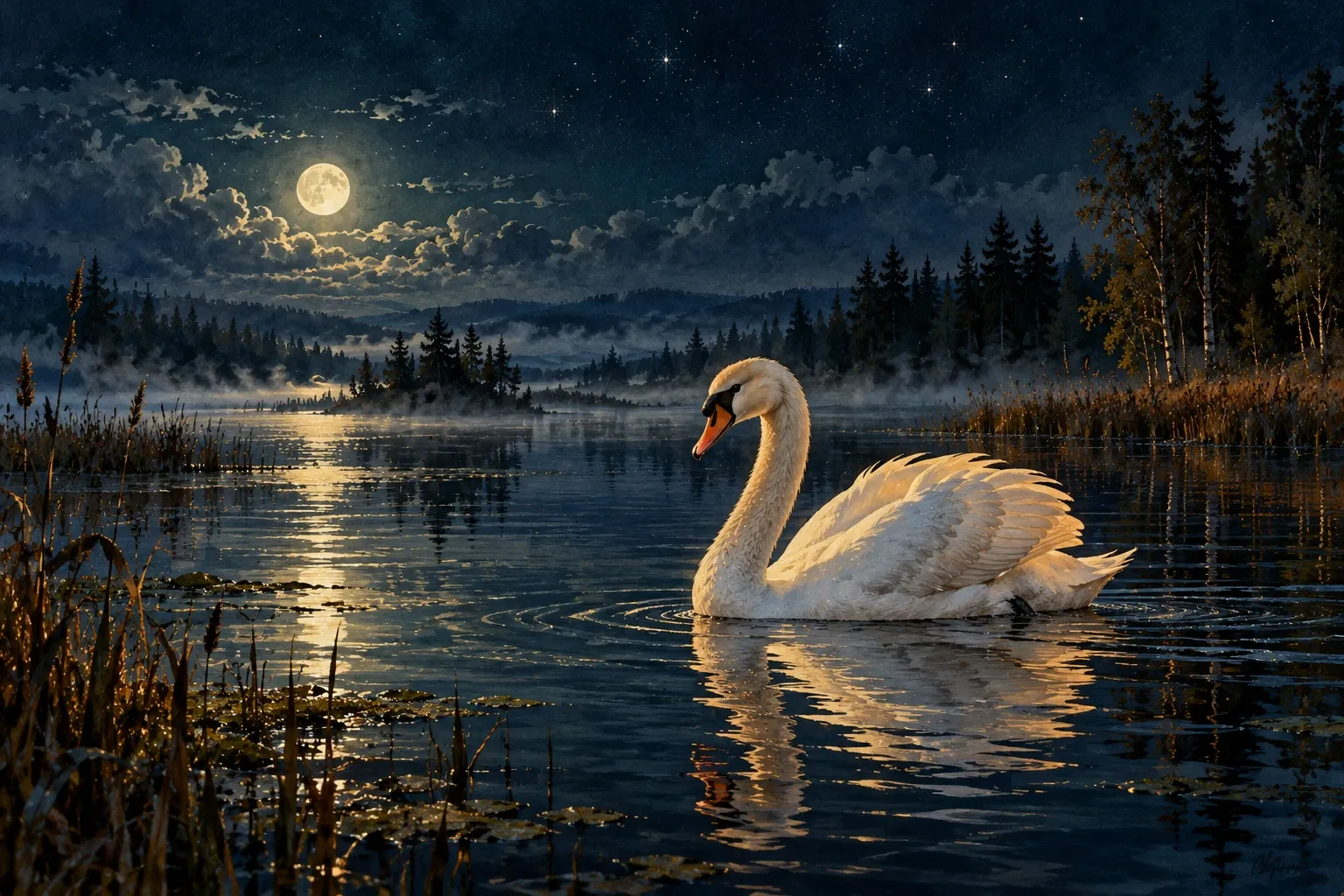
A swan reaches its long neck down among water plants, then lifts its bright head into the air. Its broad feet keep paddling beneath the smooth surface. That quiet effort and visible ease belong together: Swan teaches you to meet change with poise and to trust the strength working out of sight.
The beauty that grows into view
A young swan does not begin in the full white plumage that makes the adult so striking. The familiar tale of the duckling who grows into a swan gives that change a human shape: a person can outgrow the names others gave them. Swan’s spiritual meaning lives in this unfolding. The shape you see today is one part of a life still taking form.
The swan’s long neck joins water and air: it reaches below the surface for food while the bird remains poised above it. Let that image teach you to bring what is deep in you into the open. Grace is not a polished face you put on for others; it is the steadiness that comes when your outward choices begin to reflect your truest nature.
Two swans often bow toward each other during courtship, moving in a way that can seem like a shared dance. Their pairing has made them signs of devotion and partnership. The deeper teaching is about a bond that can hold two distinct lives: closeness asks for attention and loyalty, while each partner remains a whole creature. Swan asks you to bring your real self into love.
A swan’s nature through hard seasons
When Swan arrives as a spirit animal during a season of confusion or change, watch how it keeps moving through the water. Its feet work steadily below while its body travels smoothly onward. Hold faith with the next small stroke when the whole crossing feels long. You can carry strain without letting it choose your manner.
Swan’s lifelong nature joins tenderness to force. A bird that looks serene can defend its nest and young fiercely. If swan is your totem, that pairing of composure and protectiveness belongs to your nature too: guard what you love, and keep your balance while you do it. Its strength is not a show of anger; it is the readiness to stand firm when something precious needs your care.
Call on Swan as a power animal when a difficult conversation, a new responsibility, or a period of change asks for steadiness. It glides, but it also paddles; it watches its surroundings and knows when to protect its young. Borrow that union of poise and alertness. Speak plainly, move with care, and stay present through the work beneath the surface.
When Swan comes in a dream
A white swan in a dream carries the meanings of beauty, honor, and spiritual growth associated with its bright plumage. The image may mark a part of you coming into clearer view, or a change you are learning to meet with faith.
A black swan brings the feeling of the rare and unfamiliar. Its dark feathers can give an unexpected turn a face: something new has entered your life, and you are still learning what it means. A swan that keeps swimming when the water is difficult points toward persistence. It continues its passage, and the dream holds up that steady movement as a picture of endurance.
A swan beside its mate brings partnership and devotion into view. The image may touch a close bond, or a longing for one. Pay attention to what the birds do: whether they draw near, move together, or swim apart. The dream’s meaning rests in that concrete gesture of connection or distance.
Swans in story and tradition
In one telling of the Irish legend of the Children of Lir, Aoife turns Lir’s four children into swans, and they spend nine hundred years on Irish lakes, rivers, and coast. The tale binds Swan to family love and endurance: the children’s shape changes, the years pass, but their kinship remains the thread of their long passage. Their story gives the bird’s beauty a sorrowful depth and its song a place to carry longing.
Greek stories joined swans to Aphrodite, goddess of love, and Apollo, god of music and light. The bird’s graceful movement and striking voice suited both: tenderness and beauty on one wing, song and brightness on the other. The old belief that a swan sings beautifully just before death gave the phrase “swan song” its lasting image of a final performance. In Swan’s teaching, a voice has weight; use yours with care, especially when a chapter is ending.
In Hindu tradition, the swan appears as hamsa, a figure of wisdom and spiritual discernment. The image of a swan moving through the waters of the mind connects its natural passage through water with the work of seeing clearly. This is a different tradition from the Greek stories of love and song, yet both look closely at the bird’s ability to move with grace through more than one element.
At the lake’s edge, a swan’s back catches the light while its feet go on turning beneath the water. Its calm is real, and so is the work that sustains it. Carry that picture with you: poise above, strength below, and the quiet courage to keep moving as your own true nature comes into view.