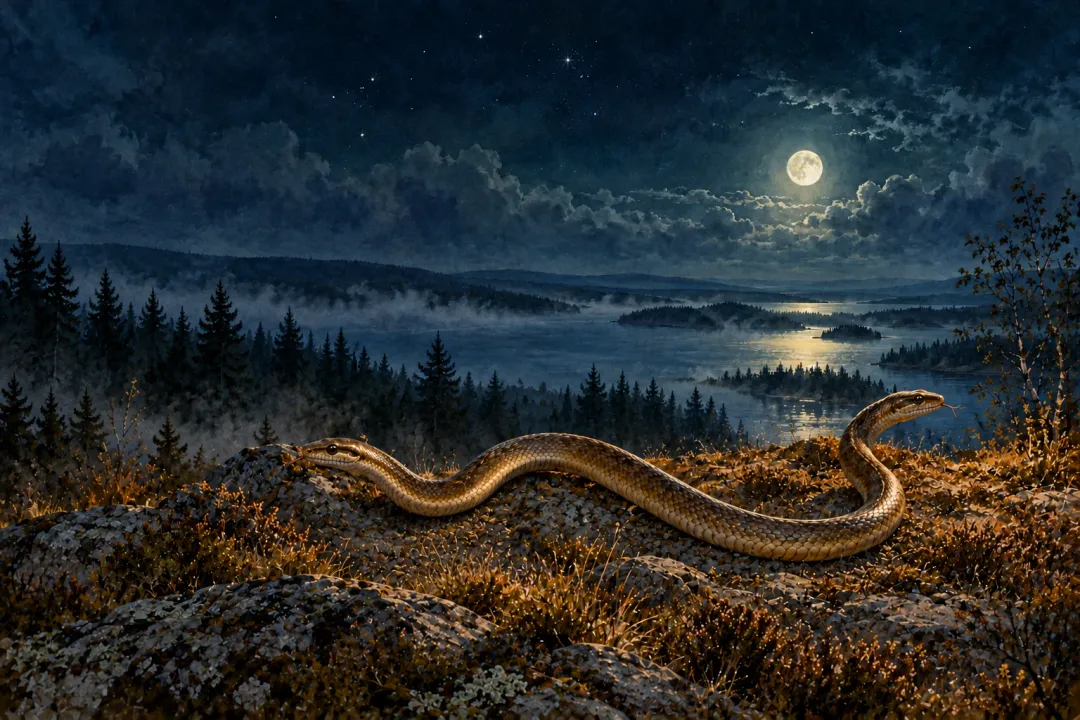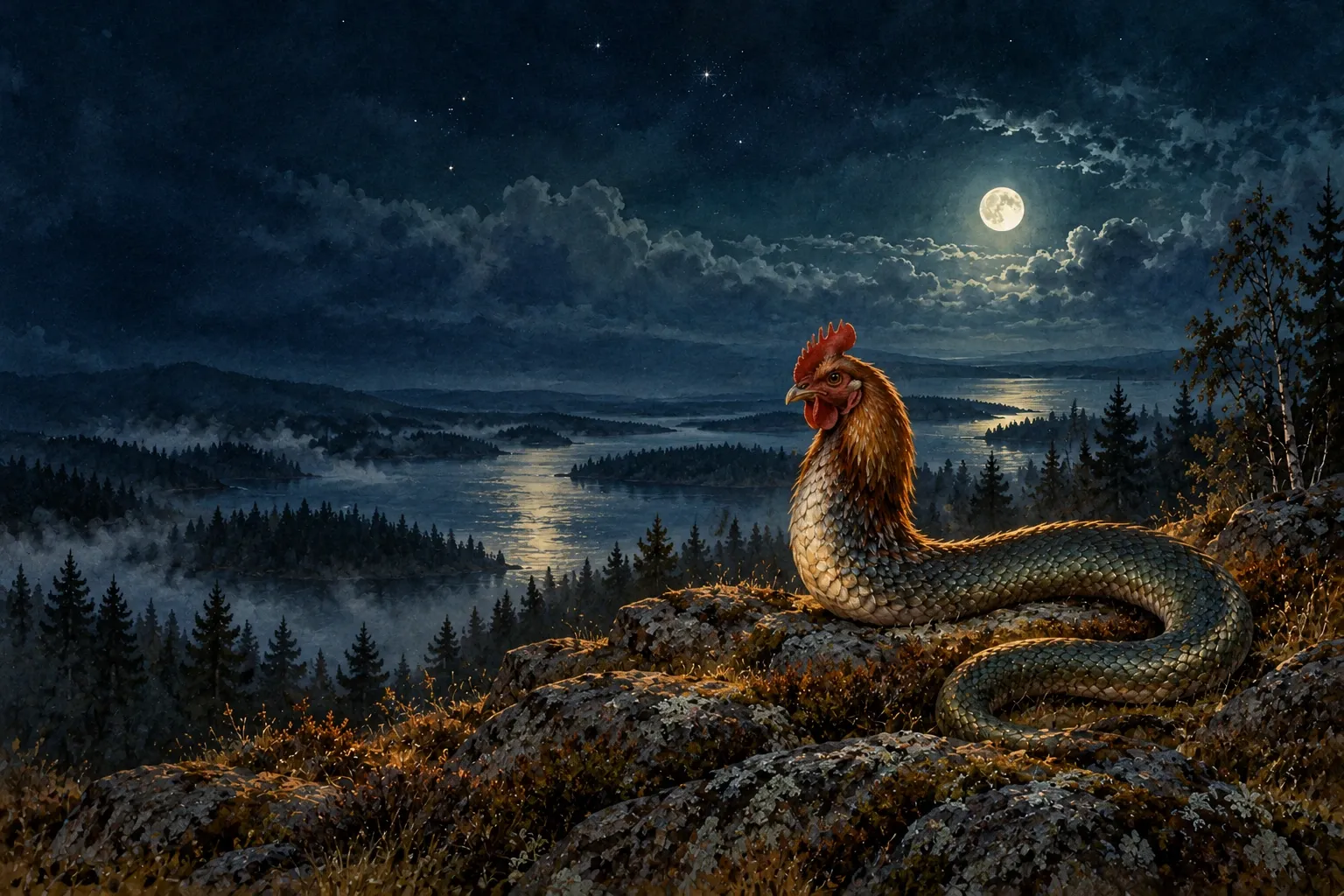
The basilisk’s crown is a pale mark on a small serpent’s head, and its stare leaves a body lifeless. That is a fearsome kind of authority: the power to stop the world with a look. Yet this little king has a weakness too. A weasel can drive it from its hole, and a rooster’s crow can end its reign. The basilisk teaches that strength needs a boundary, and that even the most dreadful force has a limit.
The little king who guards a boundary
Other snakes flee at the basilisk’s hiss. It makes a den where the ground seems scorched, and its venom clings even to a weapon raised against it. Such a creature does not ask permission to take up space. It holds its ground, and the world around it feels the consequence.
When harm is near or someone presses past your limits, the basilisk lends you a hard, steady spine. Draw the line plainly. Endurance does not mean making yourself easy to wound; it means knowing what you will protect and staying there. The basilisk’s power is formidable, but its danger also warns you to take care with the force you use. A glance can silence, a word can poison a room, and pride can make a small boundary into a kingdom no one can enter.
There is another side to this creature. Its lair is hidden, and its own gaze can turn back on it in a mirror. The basilisk points toward the feelings you have pushed underground because they seemed too sharp to touch. Meet them with the same clear-eyed attention you would give an approaching danger. What is buried still shapes the ground above it.
When the basilisk comes close
In a difficult season, the basilisk stands beside you when another person intends harm or tries to bend your principles. It hisses and sends the other serpents scattering; it lends the resolve to name what is wrong and keep your footing. When you carry anger or fear you have kept hidden, its den gives that shadow a shape you can face.
The basilisk’s nature is solitary, proud, and sure of its own pace. It does not need a crowd to make its presence known. If this creature has always felt like yours, its nature holds a reminder to lead with confidence while keeping watch over your words. The creature’s crown is small, but even a little king can mistake attention for proof that he is right.
Call on the basilisk’s strength when you need to clear a path or defend a hard-won decision. Its imagined breath burns away what stands in front of it; let that fierce image lend you stamina for the task at hand. But carry its antidote with you: the weasel enters the den, and the rooster’s dawn call breaks the spell. Strength serves best when it knows when to stop.
What the basilisk shows in dreams
A basilisk glaring at you brings the image of a problem close enough to meet eye to eye. The dream can point toward an answer you have overlooked because it is already in front of you. If the creature looks into a mirror, its dangerous gaze turns inward. This may be a time to face a feeling you have kept out of sight.
When a basilisk crawls into a hole, the image suggests retreat: something troubling has been pushed underground, and the dream asks what waits there. A newly hatched basilisk carries a different feeling. Its soft beginning is exposed and vulnerable, so the dream may echo a tender part of life that needs your attention. Each image keeps the creature’s sharpness; the question is whether you are watching the danger, hiding from it, or seeing it clearly.
The basilisk in medieval Europe
The basilisk belongs to European stories of a serpent with a deadly gaze, sometimes joined to the body of a rooster. Around 1150–75, a French marble arch from a church in Narbonne included the basilisk among eight fantastic beasts. In medieval Christian art, artists made the basilisk a sign of the devil for Christ to tread down. By the late fourteenth century, the basilisk had entered Chaucer’s Canterbury Tales. The creature can be a warning, a monster, and a lesson all at once: power commands attention, but it does not make its bearer wise.
The basilisk’s crown is still there in the old image, bright against the dark of its den. Let it remind you to stand firm without letting pride rule you, and to turn your gaze toward what needs facing. Even the little king must hear the morning rooster.