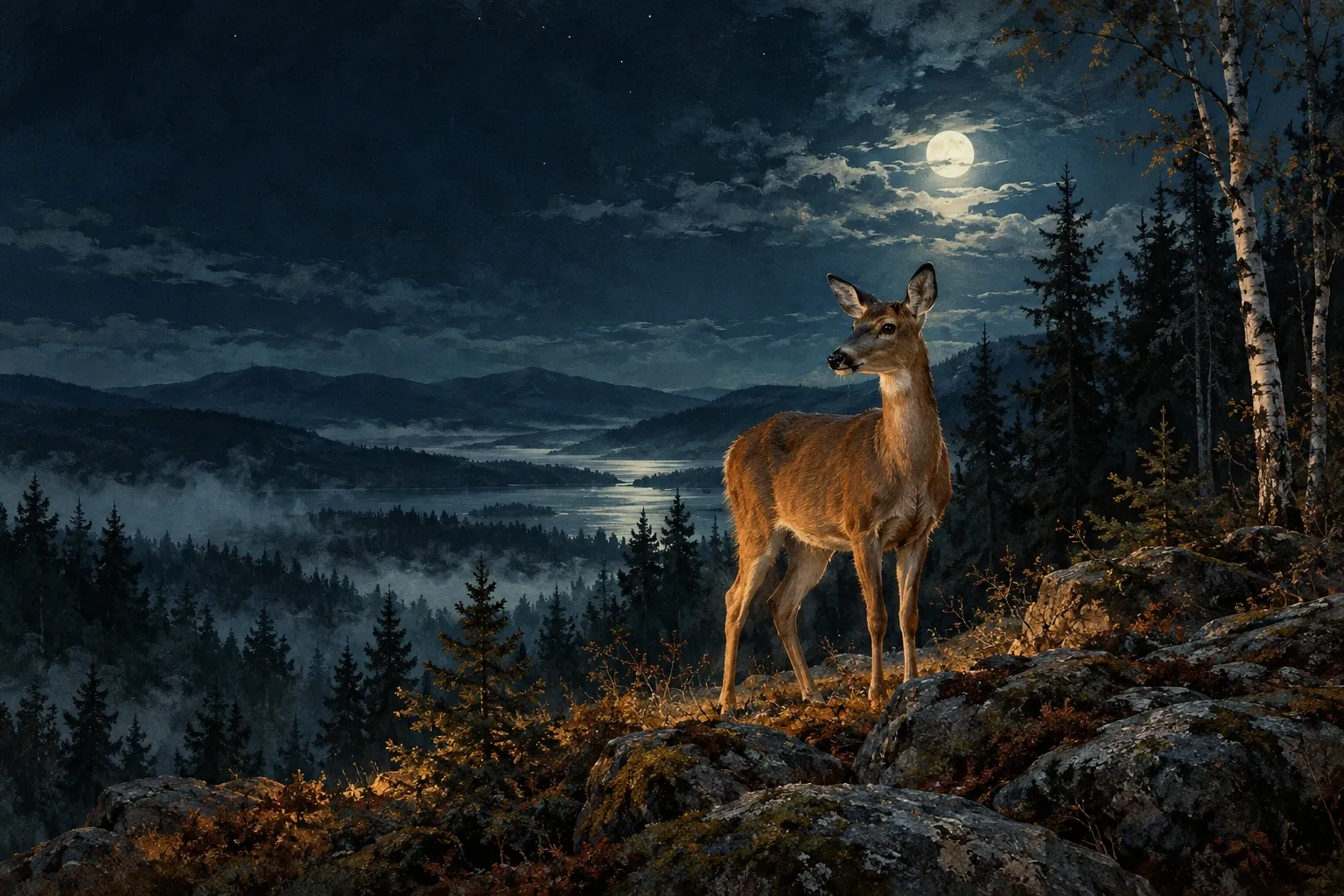
A doe stands among the trees, ears turning toward a sound too faint for us to catch. For a breath she is still, every sense gathered around the moment. Then she springs away, swift and sure. Deer teaches that tenderness has its own strength: a heart can remain open while instinct keeps watch, and a light step can carry us toward a new path.
Deer’s gentle strength
A deer survives by noticing. Its hearing and sense of smell help it detect danger; its long, muscular legs carry it quickly to safety. It does not need to meet every threat head-on. Deer asks you to trust the quiet signals that tell you when to stay, when to move closer, and when to leave.
That alertness is not hardness. Deer’s quick flight comes from a life closely attuned to the world around it. Its watchfulness makes space for gentleness, rather than taking it away. When conflict has made you guarded or resentful, Deer’s spirit animal message for this season is to let compassion return without ignoring what your senses have learned. Peace can loosen the grip of anger; a kinder view can help an old relationship find a way forward.
Deer also carries the fawn’s freshness. A young deer’s spotted coat helps it stay hidden, and its early stillness gives way to following its mother. In that small beginning is a reminder of how new life needs care before it can run. Deer brings attention back to simple wonder: the flower beside the path, the first breath of spring air, the pleasure of being alive. Tenderness can protect what is just beginning in you.
The deer’s path through change
A deer’s antlers grow and are shed in yearly cycles. Their return gives Deer a strong image of renewal: what has served its season can fall away, leaving room for growth. When a stag appears in your thoughts or on your path, consider what has become too heavy to carry. Its antlers do not stay fixed; each new set is part of a living cycle.
A deer does not always follow a familiar route. Mule deer can change paths, and the shifting course helps keep them less predictable to predators. Deer’s lifelong kinship belongs to those who move by instinct, observe before choosing, and offer kindness without needing to take charge. Such people can guide others gently, noticing a change in the air or a safer way home before anyone else does.
Call on Deer’s strength when a task asks for sensitivity and speed together. A creative project may need you to sense what will nourish it and what will harm it. A difficult passage may ask for endurance, a clear instinct for danger, or the courage to set down a grudge. Deer’s power is not a promise that every road will be safe. It is the steadiness to read the ground, change direction, and keep your center as you move.
What a deer in a dream can suggest
A deer appearing in a dream can point toward compassion, gentleness, and a more receptive side of the self. The image carries a feminine quality in the dream tradition associated with Deer: a call to recognize tenderness as part of your own strength. Let the particular deer guide the meaning. One standing quietly may bring attention to watchfulness and stillness; a deer running may echo a need to respond quickly or seek safety. Those possibilities rest on the animal’s nature, while the dream’s own details matter most.
Deer in sacred stories
In Celtic tradition, the hind and the stag carry different aspects of Deer. The hind is feminine and connected with the fairy world and spiritual teaching. The stag is bound to the forest and the earth, a kingly protector of the creatures there. Together they hold grace and guardianship in one animal family.
In the Central Mexican tradition described by the Huichol, Deer was the original shaman and a chief connector to the gods. In Mayan tradition, people offered deer to the gods as a valuable sacrifice. These are distinct meanings: one places Deer at the beginning of spiritual mediation, the other in an act of offering.
Buddhist imagery also joins Deer to sacred teaching: Buddha is often shown with deer, and tradition says he first preached in a deer park. The quiet animal beside the teacher suggests a return to innocence and the wilderness. In Chinese symbolism, the deer appears on charms associated with a high government office and long life, through its connection to Shou, the God of Longevity.
Across these stories, Deer can be messenger, offering, protector, or companion to teaching. Its own presence remains close to the ground: the pause, the listening ear, the sudden leap through leaves. When you picture a deer beneath the trees, remember its lesson. Keep your heart tender, your senses awake, and your step ready for the path that opens.