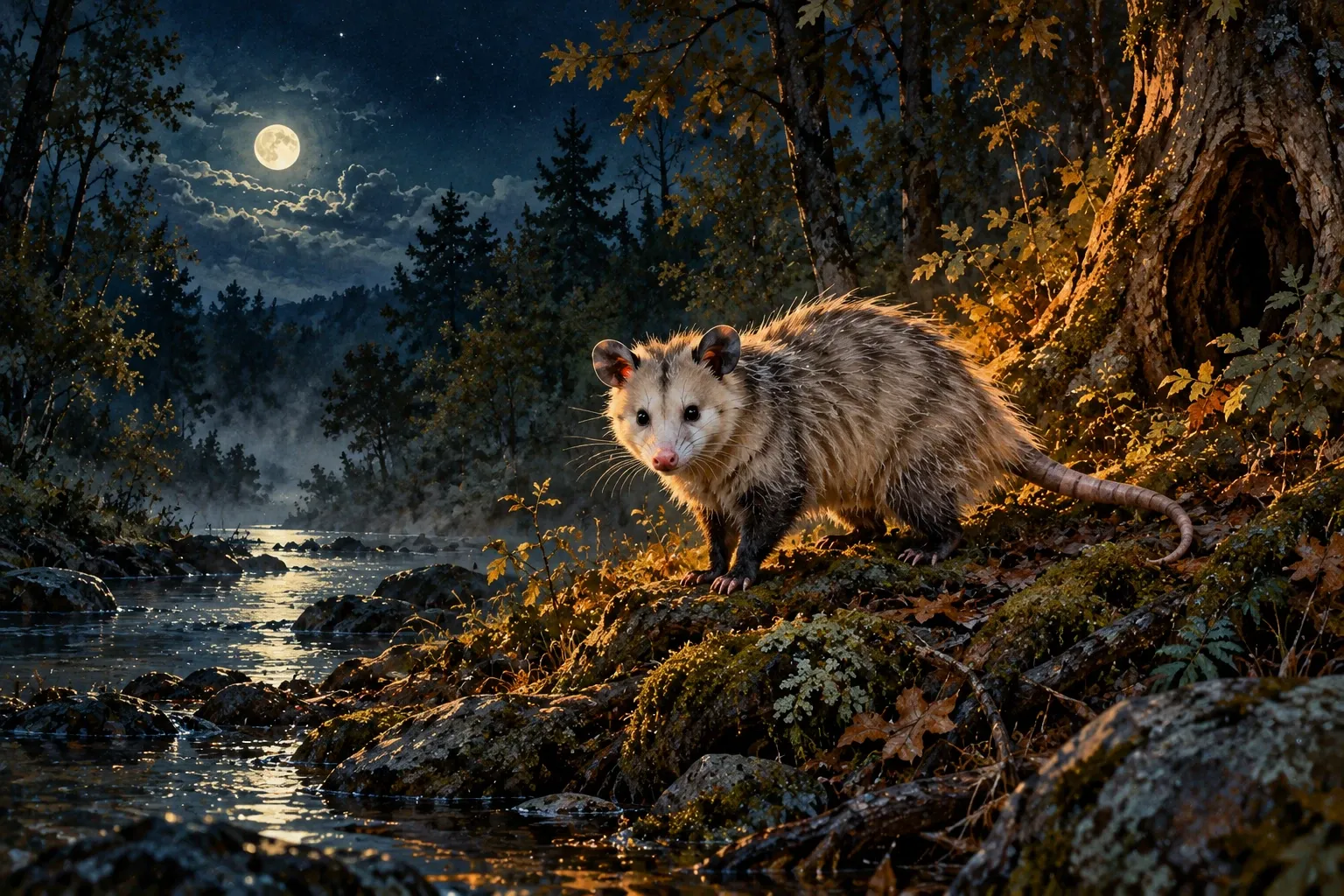
A frightened opossum can collapse where it stands: eyes closed, body limp, a foul smell rising from its fur. The stillness is an automatic response to fear, not a plan it makes. When danger passes, the animal stirs and slips away. That pause holds the heart of opossum’s teaching. Survival can begin with stillness; instinct can carry you through a moment when force and quick answers fail.
Opossum’s wisdom in a hard season
Opossum travels by night, nosing along for a meal and sheltering wherever a safe nook presents itself. It may hiss when startled, but usually wants to be left alone. Its life is a steady adjustment to what is at hand. When a season has you cornered, opossum asks you to read the danger clearly, conserve your strength, and look for the opening that is actually there. A pause can be a choice made by the body before the mind has found its next step.
The opossum’s famous defense can look like a performance, though the animal does not decide to faint. That difference gives its lesson tenderness: a person in distress is not failing because they cannot move at once. If you are overwhelmed, opossum’s example is to attend to what the moment permits. Sometimes the next step is small: wait, find shelter, or let one urgent demand fall away until you can see again.
Opossum’s kinship belongs to those who keep their counsel, notice the edges of a situation, and adapt without needing the center of attention. It is a solitary wanderer, comfortable in the dark and resourceful about food and shelter. That nature lends patience and practical instinct: you can take time to understand a room before speaking, or keep another route in mind when the first one closes. The point is not to hide from every hard thing. It is to know when quiet attention will serve better than a contest.
The care it carries and the strength it lends
A mother opossum’s young begin life tiny and blind, then grow in the shelter of her pouch. Later they may cling to her back as she travels. The care in this image is close and mobile: she carries the vulnerable while still moving through the world. When a new idea, a young person, or a tender part of yourself needs protection, opossum teaches you to carry it patiently and keep it near until it can manage more on its own.
The opossum’s body offers another kind of shelter. Its pouch holds the young through their earliest growth; its stillness can confound a predator when escape has failed. These are not signs of invulnerability. They are specific ways a small animal gets through a dangerous world. When you call on opossum’s strength for a difficult task, let its resourcefulness help you find a workable tactic: change your approach, keep a backup plan, and use tact when blunt confrontation would close the way forward.
There is a fine line between a temporary mask and losing sight of yourself. Opossum’s appearances can protect it, and its quiet manner can keep a conflict from growing. The same teaching calls for discernment: notice when someone is presenting a false face, and take care not to make a disguise your only way of meeting the world. Once the danger has passed, let your own voice return.
Opossum in a dream
A dream of an opossum lying motionless can bring attention to a moment when you feel exposed or overwhelmed. Its stillness suggests a pause before action: what pressure needs to ease before you can see a way through? If the opossum hides or plays at hide-and-seek, the dream may point to concealed intentions, misleading clues, or something you have not yet been willing to see. The animal’s own habit of sheltering and slipping away gives such a dream its particular shape: someone may be keeping out of sight, or you may be trying to avoid a truth that needs a closer look.
If the dream turns on the opossum’s sudden appearance and disappearance, consider how quickly the scene changes once attention shifts. The animal’s survival depends on reading the moment, not on controlling everything in it. Let the dream’s details guide you: a still animal suggests one kind of pause; a hidden one, another kind of uncertainty.
Stories carried with the opossum
In some stories told in Central America, especially southern Mexico, the opossum is a trickster who finds a clever escape from danger. Other traditions connect it with fertility. These meanings belong to the stories that carry them; they are not one teaching shared by every people. The animal’s quick wits and vulnerable young give those stories their own particular ground.
The Maya placed the opossum in the Dresden Codex as a sign of death and rebirth, drawing on the startling sight of an animal that seems dead and then returns to movement. The image makes its pause part of a larger cycle: what looks finished can open into life again. Warriors used the opossum’s apparent death as a battlefield tactic, waiting for a chance to surprise an opponent or escape. In each telling, the animal’s power rests in timing and the unexpected turn.
Opossum does not promise that fear will leave you untouched. It shows a small, watchful creature meeting danger with the response its body has, then setting out again when the path clears. Picture those bright eyes opening in the dark, the nose testing the air, the feet carrying it toward shelter or food. Its teaching is to wait for the opening—and to trust the life in you that rises when it comes.