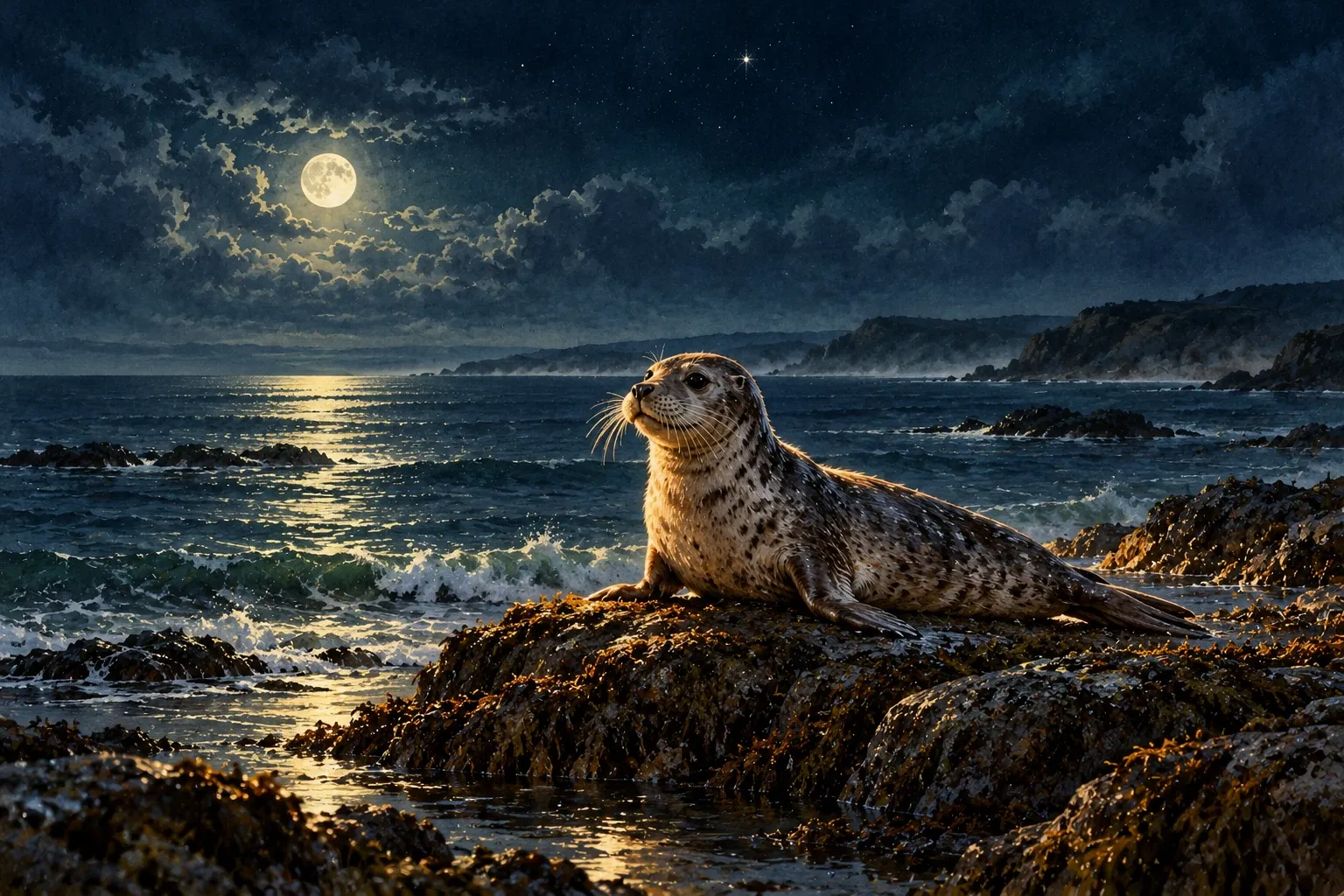
A seal hauls itself onto a cold rock, blinks in the hard daylight, then slips back beneath the tide. It belongs to both places: the restless sea where it hunts and the shore where it rests and bears its young. Its meaning lives in that passage. Seal teaches you to dive deep into imagination, then bring what is ready back into the world with patience, balance, and a little play.
Seal’s gift for moving between worlds
Underwater, a seal turns with ease, steering through shifting currents with its whole body. On land, it gathers itself and rests. This is a creature of feeling and practical life together: it can follow an inner current without losing the solid ground it returns to. When your thoughts and feelings run deep, Seal asks you to listen closely, find your bearings, and rise for air before you choose your next stroke.
The seal’s whiskers register small movements in the water, helping it find prey in dim depths. Its sensitive hearing serves it underwater, too. These are good emblems for attention: notice what has changed around you, and listen for what another person is trying to say. Keep your own judgment beside that careful listening, as the seal keeps its body poised to turn when the water shifts.
Seals also play. A pup bats at water and tumbles with its kin; adults sometimes seem to chase and roll for the sheer pleasure of movement. Seal’s message is that delight belongs in a serious life. If work has crowded out every lighter hour, follow the animal’s example: come up from the depths, rest on the shore, and let play restore your balance.
When Seal swims beside you
When a seal meets a current, it turns its body and steers through the moving water; when it needs air, it surfaces, and when it reaches shore, it rests. In a demanding season, that rhythm carries a steady lesson: pause amid the noise, listen for your own bearings, then choose a direction and keep moving. Let Seal’s way of meeting the water guide you through advice, emotion, or change pressing in from every side.
A lifelong kinship with Seal carries the same nature through changing seasons. Its life joins water and land, alertness and rest, quick movement and sociable play. If this is your animal, your imagination can travel far and still find a way to make something others can share. Hold on to that ability when people mistake your ideas for daydreams; the seal’s deepest journeys are made below the surface, out of sight.
For a task that needs invention, courage, or emotional steadiness, call on Seal’s strength. It can dive into a problem, feel its way through uncertain waters, and return to the surface for a clear breath. When an idea stalls, give it time to develop; when a change unsettles you, draw on the seal’s agility. And when heavy feeling threatens to carry you under, follow its rhythm: surface, breathe, and begin again.
Seal dreams and their changing waters
A playful seal in a dream can reflect a wish to recover ease and imagination. A group of seals can point toward helpful company around a practical ambition. The dream’s meaning rests in the scene: seals gathering on a rock suggest a pause, while a seal diving back into the sea suggests returning to a feeling or idea that still has depth to offer.
A sick or wounded seal can carry a more troubled image. It may reflect worry that has grown heavy, or a part of your own spirit that feels neglected and needs attention. A white seal has been linked with marriage, family happiness, and friendship. Treat that as an image of hope in the dream, not a promise of what must happen.
Selkies and the seal people
In Scottish and Icelandic selkie stories, seals can shed their skins and take human form on land. The stories hold two homes in tension: the human shore and the sea that calls the selkie back. Some tell of a human who hides a selkie’s skin, keeping its owner from returning to the water; the recovered skin restores the way home. In Orkney’s story of Ursilla, seven tears shed into the sea call a selkie lover to her. These tales make the seal a figure of longing, transformation, and the pull of one’s own nature.¹
Inuit tell of Sedna, who belongs to the sea and is associated with seals and other marine animals. Her father casts her from a kayak; when she clings to it, he cuts off her fingers, and the severed digits become sea creatures. Sedna then becomes a powerful sea being. Her story places human survival in relationship with the creatures of the water, and gives the seal a place in a world shaped by respect, need, and consequence.
A seal’s life keeps returning to that meeting of sea and shore. It slips under, finds its way through the dark, and comes back into the light to rest. Carry that image with you: imagination can go deep, and still find its way home.